
Color banding fix: how salons correct visible bands and stripes

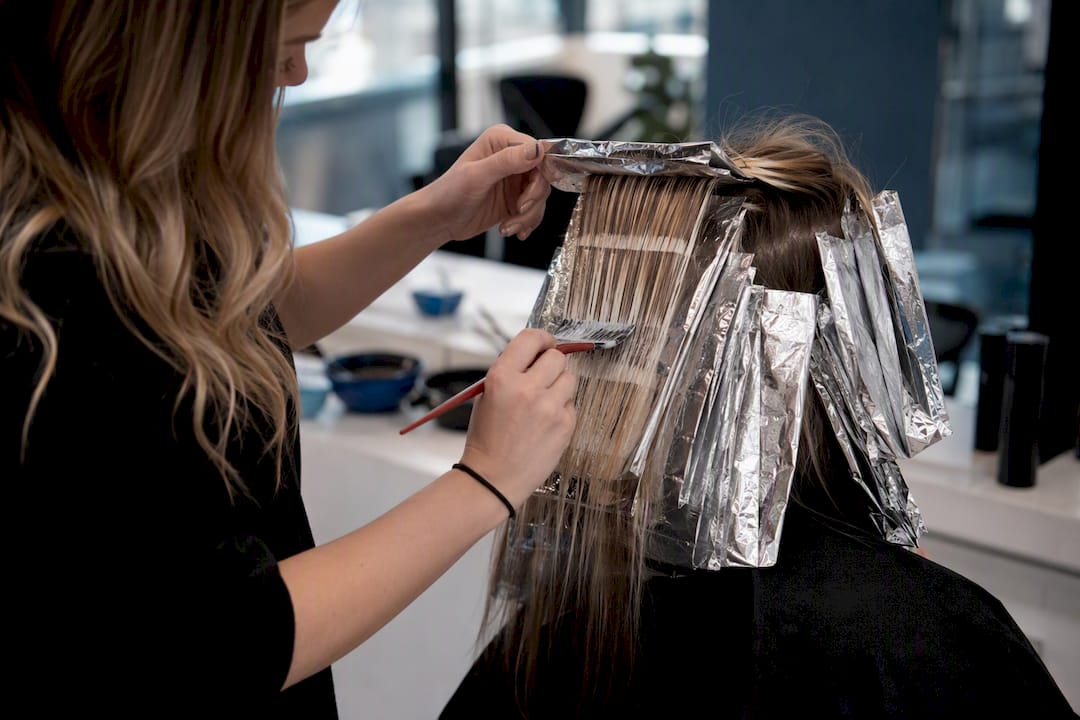
A professional colour correction is the most reliable color banding fix for visible bands, stripes or patchy regrowth lines. The first step at a salon is never lifting straight away. It’s a diagnosis, usually followed by pre-toning to equalise the canvas before any lightening begins. Trying to lift banded hair yourself with box dye or a stronger developer almost always deepens the contrast rather than blending it, because you’re adding colour on top of already uneven pigment.
Book a colour consultation and strand test before touching your hair further
Bring photos of your hair history and any box dye or previous salon receipts
Expect a staged plan rather than a single dramatic appointment
Quick fact: correct diagnosis and minimal intervention account for roughly 80% of successful corrections, according to professional colour correction guidance, which is exactly why the consultation matters more than the product on the shelf.
Key Takeaways
Fixing colour banding reliably requires professional diagnosis, staged pre-toning and lightening, and follow-up reassessment, not a single aggressive DIY treatment.
Point | Details |
Diagnosis comes first | Interview, natural-light visual check and strand/porosity tests decide the entire correction plan. |
Pre-toning evens the canvas | An alkaline demi-permanent step before lifting prevents banding from getting worse. |
Corrections are staged | Most complex banding needs one to three sessions with a two to three week reassessment between them. |
Avoid the red flags | Skipped strand tests, high-volume developer straight away, and single-session promises signal risk. |
Arqhair runs the full process | Wella Colour Experts at Arqhair use documented consultation, strand testing and staged corrections for banding. |
Table of Contents
How do stylists diagnose colour banding?
A stylist can’t fix what they haven’t properly assessed, so every serious correction starts with three checks: talking, looking, and testing.
The interview. Your stylist needs your full colour history: box dye, henna, previous salon lightening, and how long ago each service happened. Henna in particular changes how hair responds to future lightening, sometimes for years.
Visual analysis in natural light. Artificial salon lighting flatters tone and hides warmth, so a thorough stylist checks your hair near a window or under daylight bulbs, comparing roots, mid-lengths and ends to spot where the banding actually sits and which unwanted tone dominates (usually orange, yellow or green).
Porosity and elasticity testing. Porous hair, often from previous bleaching or heat damage, grabs and releases colour faster than virgin hair. Skipping this step is how one section of your head ends up far lighter or darker than another.
The strand test. A small section is treated with the exact product mixture planned for your full head. This predicts how much lift you’ll actually get, and it’s what governs the developer volume a stylist chooses, commonly 20 volume or lower where possible.
Pro Tip: Ask to see your strand test result before agreeing to the full appointment. If a stylist skips this step or brushes past it, that’s your cue to ask more questions before committing.
This diagnostic stage is where most corrections are actually won or lost. Get it wrong, and the most skilled application in the world won’t save the result. Our hair colour correction guide walks through what this process looks like at ARQ Hair in more detail.
What salon techniques actually fix banding?
Once diagnosis is complete, correction is a toolbox job, not a single trick. Leading colour educators favour combining several targeted methods rather than reaching for one aggressive fix.
Pre-toning or pre-equalising. An alkaline demi-permanent deposit is applied first to even out existing tonal inconsistencies. Correcting years of built-up banding often starts here, because lifting over uneven colour without this step tends to exaggerate the very bands you’re trying to remove.
Horizontal placement and fine weaving. Rather than following the old demarcation lines, stylists deliberately weave colour horizontally, using fine foils or open-air techniques that pull pigment from root to length. This breaks the visible line where regrowth meets previous colour instead of reinforcing it.
Pigment filling. If hair is very light and the goal is to go darker, skipping a fill often leaves the result dull, faintly green, or fading within a few washes. A fill deposits the underlying warmth that darker colour needs to sit on top of properly.
Colour reduce treatments. In some whole-head corrections, a professional colour-reducing treatment lifts artificial permanent pigment without the damage of heavy bleaching, useful where the client’s history rules out further lightening.
Staged developer strength. Corrective work almost always starts gentle. Stylists prefer to lift in stages, checking results between rounds rather than reaching for a high-volume developer to force one dramatic change.
Toning after lift. Once lightening reaches the right stage, toner neutralises brassy orange or yellow undertones so the final colour reads clean rather than warm or muddy.
Pro Tip: If your regrowth line is the main issue, ask specifically about root-to-length blending. It’s a placement technique, not a product, and it’s often what separates a soft, grown-out look from an obvious stripe.
What’s the realistic timeline for fixing colour banding?
Complex banding rarely resolves in one visit, and any stylist promising otherwise is skipping a step somewhere.
Session one usually handles diagnosis, pre-toning or pigment filling, and a first controlled lift where needed. This appointment often runs longer than a standard colour service, sometimes two to four hours depending on how many tones are involved.
A follow-up two to three weeks later lets your stylist reassess how the colour has settled and processed once your natural oils and a few washes have had their say. Clear communication about how many sessions to expect at the outset prevents the frustration of thinking one appointment should have fixed everything.
A third session, if required, refines tone or addresses any section that lifted differently than predicted.
This staged approach protects your hair’s integrity. Minimal intervention, doing only what’s needed at each visit rather than forcing a finished result in one sitting, is the difference between a correction that holds and one that leaves your hair compromised. Between visits, sulphate-free shampoo and a weekly bond-repair mask help the colour last and reduce the chance of new banding developing at the demarcation line.
What should you ask a salon before booking a correction?
Choosing the right stylist matters more for banding than for almost any other colour service, because the plan has to be built around your specific history.
Look for genuine colour specialist credentials, ideally a Wella Colour Expert or equivalent qualification, and ask to see documented before-and-after photos of similar corrections.
Ask directly: how many sessions do you expect this to take, will you pre-tone first, and will you run a strand test before the full application?
Ask about their follow-up policy. A salon confident in its work will build in a two to three week reassessment rather than treating the first visit as the end of the story.
Pro Tip: A stylist who can’t explain their plan in plain language before they start probably doesn’t have one. Walk away from anyone who promises a total fix for complex, multi-tonal banding in a single appointment.
Watch for red flags too. Common corrective mistakes include jumping straight to a high-volume developer, skipping the strand test entirely, or mixing colour remover directly with bleach, a combination that risks serious breakage. Our guide to fixing common colour mistakes covers more of these warning signs.
Does hair type change how banding is corrected?
Texture and porosity change the plan considerably, even when the banding pattern looks similar on paper.
Fine, previously undamaged hair tends to lift quickly and evenly, so stylists often move through stages faster, but the same speed means overprocessing risk is higher if developer strength isn’t kept conservative. Coarse or resistant hair, common in some naturally dark or previously virgin heads, can need longer processing times and sometimes a stronger initial pre-toning step just to get pigment to take evenly across the shaft.
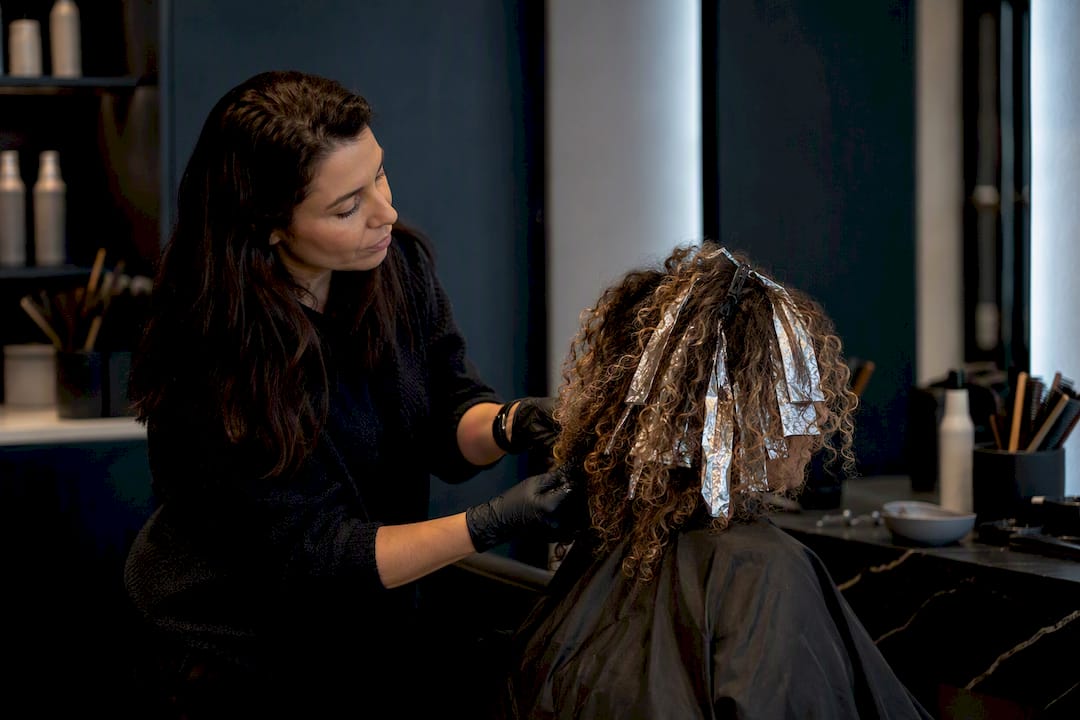
Curly and coily textures bring a different challenge: banding often shows up more visibly at the curl pattern’s natural part lines, and foil placement needs to follow the hair’s natural fall rather than a straight-hair sectioning pattern, or the result can look striped once it dries and curls spring back. Previously relaxed or chemically straightened hair usually carries higher porosity along its length, which means it absorbs and releases colour faster than the regrowth, a mismatch that’s a common root cause of banding in the first place.
Fine highlighted hair with multiple previous lightening services often needs pigment filling even for what looks like a modest colour change, simply because so much natural pigment has already been stripped. Whatever your texture, the porosity and elasticity checks covered earlier in diagnosis exist precisely to catch these differences before a single drop of product goes on your hair.
Are there risks with common banding correction methods?
Correction is safe when it’s staged and tested properly, but every method carries some risk if it’s rushed.
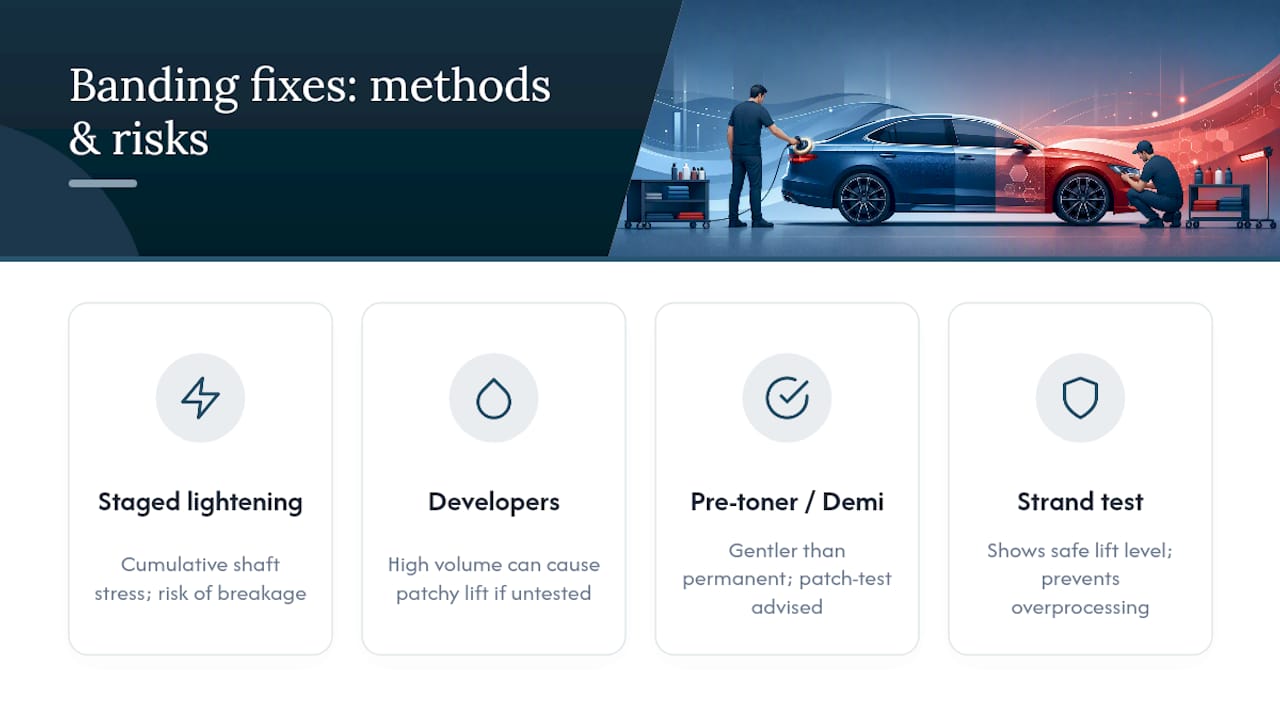
Repeated lightening, even in careful stages, adds cumulative stress to the hair shaft, and multiple sessions in short succession can leave hair feeling dry or prone to breakage if bond-repair treatments aren’t built into the plan. High-volume developers used without a strand test can cause uneven, patchy lift rather than the even result they’re meant to produce, sometimes making banding worse instead of better. Pre-toners and demi-permanent products are generally gentler than permanent colour, but skin sensitivity and allergic reactions to any dye product are possible, which is why a patch test is standard practice before a first-time service.
Colour-reducing treatments, while less damaging than bleach for removing artificial pigment, can occasionally leave hair with a slightly altered texture or require a follow-up toning step to correct any residual warmth. Mixing colour remover with bleach, one of the red flags mentioned earlier, isn’t just a quality issue: it’s a genuine risk to hair integrity and scalp comfort. The single biggest safety factor across every method is the same one: staying within what a strand test and porosity check actually support, rather than pushing for a faster result than your hair can handle.
A note from ARQ Hair on correcting bands properly
Every correction we take on starts the same way: interview, visual check in natural light, then a strand test. It’s unglamorous, but it’s the part that decides whether a correction holds. Our team are trained Wella Colour Experts, working within a family salon legacy built over three decades on getting this staged process right rather than rushing it.
Ready to book your colour correction consultation?
If your regrowth line or old highlights have left visible bands, the fix starts with a proper consultation, not a guess at the chemist’s shelf. Arqhair’s colour team runs the full diagnostic process on every corrective case: history interview, natural-light assessment, porosity check and strand test, before any pre-toning or lifting plan is agreed with you.
Our professional colour service covers pre-toning, staged lightening and toning using customised Wella shades, and where the correction calls for softer blending rather than a full colour change, our highlights and balayage service can break up banding through placement alone. Bring photos of your hair’s recent history and any box dye or previous salon details you have, it genuinely speeds up the diagnosis. From there, we’ll be honest about how many sessions your specific banding needs rather than promising a single miracle appointment. Book a colour consultation through ARQ Hair’s colour page and let’s plan the correction properly from the first visit.
Frequently asked questions
Can colour banding be fixed in one salon visit? Simple, single-tone banding sometimes can, but most cases involving multiple previous colour services or strong regrowth lines need at least two sessions with a follow-up reassessment.
Is it possible to fix colour banding at home? DIY lifting or box dye applied over already uneven colour typically deepens the contrast rather than blending it. A strand test and professional pre-toning step are difficult to replicate safely without training.
How much does a colour banding correction cost? Cost depends on how many sessions your hair needs and which techniques apply, so a proper quote follows your consultation and strand test rather than a flat price.
Why does my hair go green or dull after a correction? This usually happens when pigment filling is skipped before darkening very light or lifted hair. The underlying warmth needs to be replaced before a darker tone sits on top correctly.
How long should I wait between correction sessions? Two to three weeks is standard, giving your stylist time to see how the colour has settled before deciding on the next stage.
Sources
Recommended
Comments