
Colour Depositing Conditioner for Dark Hair: What Actually Works

Last updated: 15 November 2026
Quick Summary
A colour depositing conditioner is a tinted conditioning treatment that adds temporary pigment on top of the cuticle while it conditions. On dark hair it cannot lighten your base, but it refreshes faded lengths, warms flat brown and adds shine, typically lasting two to eight washes. Stay within one shade of your natural colour for the most realistic result.
Black hair shows the least payoff; expect shine and a cooler or warmer cast rather than colour change.
Dark brown hair suits chocolate, mocha, caramel or copper tints within one shade of your natural colour.
Strand test a section from the nape and check the result in daylight before a full application.
Apply to clean, damp, towel-dried hair in four sections, working from mid-lengths to ends.
Rinse with cooler water until it runs clear and dry fully before bed to avoid transfer.
Ready for colour that lasts longer than a conditioner?
ARQ Hair offers personalised Wella colour and gentle options in a sustainable Fulham salon.
Table of Contents
What Colour Depositing Conditioner Does to Dark Hair
A colour depositing conditioner is a tinted conditioning treatment that adds temporary pigment to the hair shaft while it conditions. On dark hair, it cannot lighten or shift your natural base, but it can refresh faded lengths, warm up flat brown, and add shine that reads as richer colour. These work best as maintenance between colour appointments rather than as a replacement for professional colour.
Here is the part most guides get wrong. A tinted conditioner sits on top of the cuticle. It does not penetrate the way a developer-based colour does. That means the change you see is a glaze, not a new base, and it fades with every wash.
Realistic Results by Hair Level and Undertone
Dark hair is not one thing, and the biggest source of disappointment with colour depositing conditioner is expecting a single product to behave the same way on black, dark brown and medium brown bases.
Black hair (natural level 1-2). Expect a sheen shift rather than a colour change. A blue-based tint can cool down brassiness and add a glass-like shine; a warm brown or mahogany tint can add depth and a subtle red cast in daylight. Anything marketed as vivid or bright will do very little on unbleached black hair because the pigment needs a lighter base to show.
Dark brown hair (natural level 3-4). This is where depositing conditioners earn their keep. A chocolate or mocha mask deepens and evens tone and can make faded lengths look freshly coloured; a caramel or copper tint adds visible warmth in daylight without lifting the base. Cool-toned dark brown hair takes ash and violet shades well and can look almost cool-toned in indirect light; warm-toned dark brown hair suits copper, caramel and golden brown.
Medium brown hair (natural level 5-6). Payoff is most visible here. A tinted conditioner can add a clear warm or cool cast, refresh faded ends between salon appointments and add shine that reads as richer colour. This is also the level where a shade that is too cool can look ashy or grey, so if your undertone is warm, favour golden and caramel tones; if it is cool, favour ash, pearl and violet.
Undertones matter as much as level. Warm undertones (gold, red, copper) suit copper, caramel, golden brown and mahogany. Cool undertones (ash, blue, violet) suit ash brown, cool chocolate, blue-black and violet-based toners. If you are unsure, hold a white sheet of paper next to your jaw in daylight: gold or yellow reflects warm, pink or blue reflects cool, and a mix suggests neutral, which can wear either direction.
Grey, porous and previously lightened sections. These areas grab pigment faster and more intensely than the rest of the hair, which is why patchy results often show up at the temples, the hairline and any highlighted ends. Strand test those areas separately, and consider applying the conditioner to the darker lengths first and the lighter sections last so they spend less time in contact with the pigment.
If you want to understand how shades behave on darker bases before committing, our guide to highlights for dark brown hair breaks down levels and methods in more detail. A shade that looks subtle on a medium brown base can be almost invisible on black hair, so buy with your natural level in mind rather than the model on the box.
Choosing a Colour Depositing Conditioner for Brown Hair
For brown hair, match the pigment to the result you want, not the name on the bottle. A colour-depositing mask in chocolate or mocha deepens and evens tone. A warmer caramel tint lifts the appearance of flat, faded lengths.
A common mistake is choosing a shade two or three levels lighter than your base. On unbleached brown hair, that pigment has nothing to grab onto and often looks muddy. Stay within one shade of your natural colour.
If you are weighing up bleach-free options first, read can you colour hair without bleach before you buy.
Choosing a Colour Depositing Conditioner for Black Hair
Black hair shows the least colour payoff from a depositing conditioner, and that is the honest limitation. What it does deliver is shine, softness and a cooler or warmer cast depending on the pigment.
Look for blue-based shades to kill brassiness and warm brown tones to add depth. Avoid anything marketed as "vivid" unless your hair is already lightened, because vivid pigment needs a pale base to show.
How to Use Colour Depositing Conditioner for Even Coverage
Even coverage on dark hair comes down to preparation, sectioning and timing, not to how much product you use. Keeping the routine focused on even application also means choosing conditioning care that suits your hair’s needs, whether that is colour upkeep or a hair mask for damaged hair.
1. Strand test first. Before you commit to a full application, snip a small section from an inconspicuous area (underneath at the nape is ideal), apply the conditioner exactly as directed, and time it. Rinse, dry and check the result in daylight.
2. Patch test for sensitivity. Apply a small amount behind the ear or on the inner forearm and leave it for the time stated on the pack. Rinse off. If you have had a reaction to hair colour before, or your scalp is sensitive, do this at least 48 hours ahead.
3. Start with clean, damp, towel-dried hair. Apply to hair that has been shampooed and blotted so it is damp rather than dripping. Dry hair can draw pigment unevenly and make the result patchy; soaking wet hair dilutes the product and weakens the payoff.
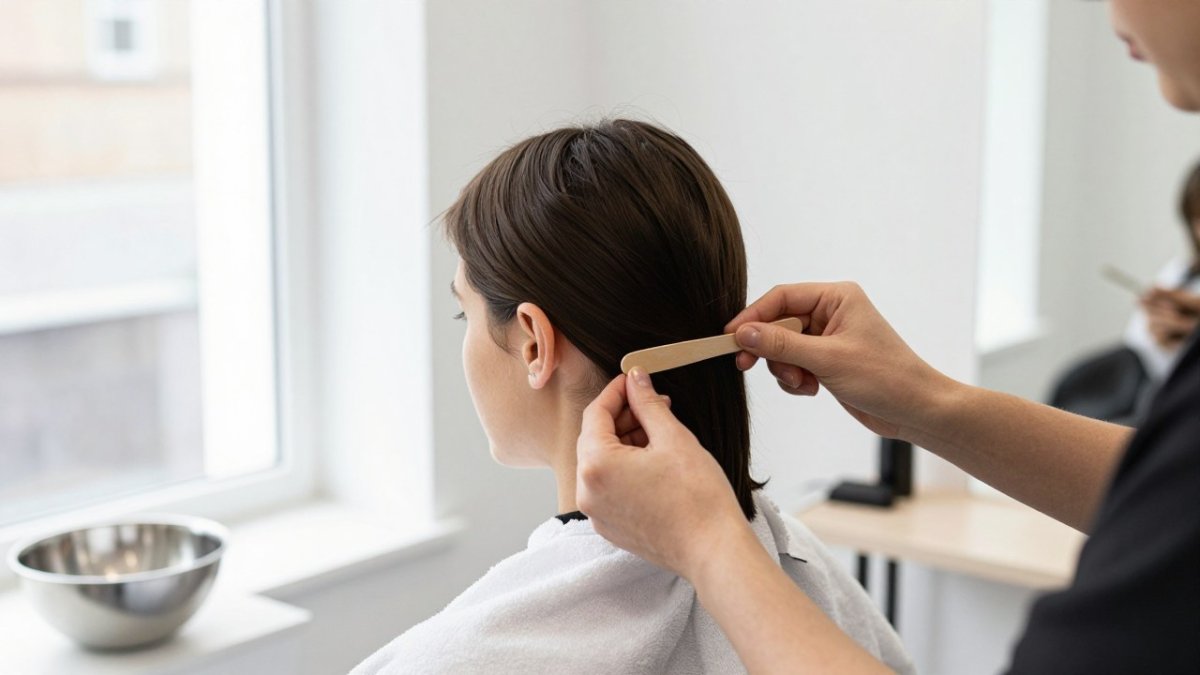
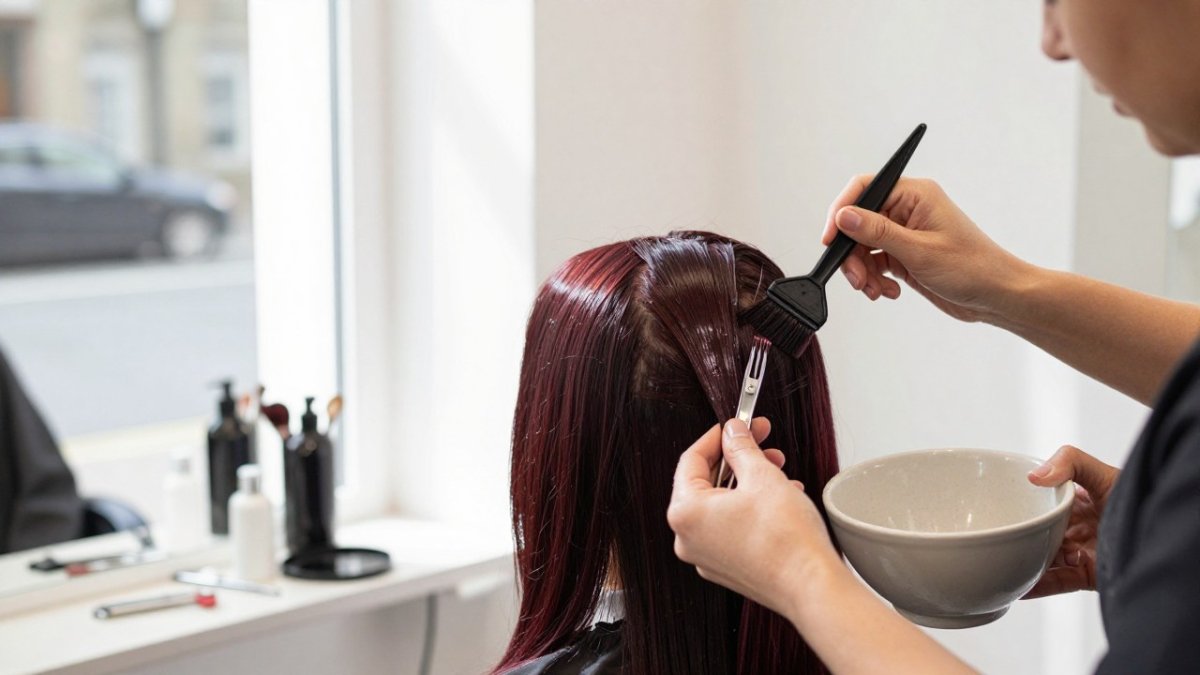
4. Section and work from mid-lengths to ends. Divide hair into four sections (two at the front, two at the back) and clip each out of the way. Take thin slices, apply the conditioner from roughly ear level down to the ends, and comb each slice through with a wide-tooth comb so the pigment is distributed evenly.
5. Time it precisely. Set a timer for the processing time on the pack, which is usually a few minutes for a conditioning gloss and longer for a more intense depositing mask. Do not leave it on longer than directed in the hope of a stronger result; on dark hair, extra time mostly increases the risk of unevenness and transfer rather than delivering more visible colour.
6. Rinse until the water runs clear. Rinse thoroughly with cooler water, working through the sections with your fingers, until the water runs clear. Any pigment left in the hair will transfer to towels and pillowcases.
7. Dry fully before bed. Let hair dry completely before lying down, and use a dark towel on application days.

Always wear gloves, and protect your bathroom surfaces, a dark towel over the basin and a quick wipe of the shower tray after rinsing will save you scrubbing later. Watch out: applying to dry hair, piling product onto the roots, or skipping the comb-through are the fastest routes to patchy, transfer-prone results.
Work through these steps in order for predictable, even coverage on dark hair.
Step | What to do | Key detail |
1 | Strand test first | Snip a section from the nape, time it, check in daylight |
2 | Patch test for sensitivity | Behind the ear or inner forearm, at least 48 hours ahead |
3 | Start with clean, damp, towel-dried hair | Dry hair draws pigment unevenly; soaking wet dilutes it |
4 | Section and work mid-lengths to ends | Four sections, thin slices, comb through, keep off scalp |
5 | Time it precisely | Use the pack processing time; longer risks unevenness and transfer |
6 | Rinse until the water runs clear | Cooler water; leftover pigment transfers to towels and pillowcases |
7 | Dry fully before bed | Use a dark towel on application days |
How Long Does Colour Depositing Conditioner Last?
Colour depositing conditioner typically lasts between two and eight washes, depending on your hair porosity and how often you shampoo. High-porosity or previously colour-treated hair holds pigment longer; virgin hair sheds it faster.
To stretch longevity, wash less often, use cooler water, and choose a sulphate-free shampoo. If you want to compare gentler semi-permanent options, our guide to semi permanent colour for damaged hair covers longevity and condition together.
Colour Transfer, Staining and Safe Removal
Colour transfer is the most common complaint with tinted conditioners. Pigment can rub onto pillowcases, towels and light clothing while hair is still damp, so let hair dry fully before bed and use dark towels on dye day.
Staining on skin usually fades within a few washes. For uneven or unwanted results, do not reach for bleach at home. Our team handles expert hair colour correction in London to remove or rebalance colour safely.
Booking a Professional Colour Refresh in Fulham
If DIY glazes are not delivering the depth you want, a professional refresh does more than a conditioner can. At ARQ Hair, our Wella Colour experts build a shade around your natural level and undertone, with gentle options for ammonia sensitivity in our sustainable Fulham salon.
Explore professional hair colour in Fulham with rich, customised Wella shades and book a consultation. A pre-booked appointment is a sensible way to plan a colour refresh.
Most dark hair looks flat not because it lacks colour, but because it lacks depth and shine. ARQ Hair can fix that with a personalised Wella formula, ammonia-sensitive options, and over three decades of family salon experience since 1992. Get started with ARQ Hair and book a colour refresh that actually suits your hair.
Frequently Asked Questions
Does colour depositing conditioner work on dark hair?
It works, but the effect is a tint rather than a full colour change. On dark brown and black hair, a colour depositing conditioner adds richness, boosts shine and neutralises unwanted warmth or brassiness. Because the pigment sits on the outside of the hair rather than lifting your natural colour, you will see a subtle shift in tone, not a jump to a lighter shade. A strand test on a hidden section shows exactly how much payoff to expect before you commit to a full application.
Will colour depositing conditioner cover grey hair on dark hair?
It can soften and blend grey strands, but coverage is partial. Grey hair has no natural pigment to anchor the colour, so a tinted conditioner tends to stain it more strongly than the surrounding dark hair, which can leave a visible difference in tone. For scattered greys, a shade matched closely to your natural colour gives the most natural blend. For larger patches of grey, a salon colour service is more reliable than an at-home conditioner.
How long does colour depositing conditioner last on dark hair?
Most shades fade over roughly four to eight washes, depending on how porous your hair is and how often you shampoo. Colour-treated and bleached hair holds pigment longer than virgin hair because the cuticle is more open. Washing with cooler water, using a sulphate-free shampoo and spacing out washes all slow the fade. Topping up once a week keeps the tone consistent rather than letting it drop out completely between applications.
Can colour depositing conditioner damage dark hair?
It is one of the gentler ways to refresh colour because it does not contain bleach or ammonia and does not lift the hair. The conditioning base usually leaves hair softer rather than drier. The main risks are staining your hands, shower tray or pillowcase, and uneven results if you apply it to hair that is not evenly saturated. Always patch test 48 hours before first use, wear gloves, and rinse thoroughly until the water runs clear.

Comments