
Semi Permanent Colour for Damaged Hair: A London Guide

Last Updated: November 14, 2026
Quick Summary
Semi permanent colour for damaged hair is a deposit-only colourant that adds tone without lifting the cuticle, making it the gentlest option for dry, brittle or over-processed hair. You can usually colour struggling hair, provided it is assessed honestly first and the formula is chosen around its condition. A strand test is essential on porous hair, as the same shade can look deeper and wash out within weeks.
Spend two to four weeks on a strengthening routine before colouring to help colour take more evenly.
Do a patch test at least 48 hours before any appointment, even with ammonia-free formulas.
On damaged hair, stay within roughly two shades of your natural depth rather than a high-contrast change.
Apply from mid-lengths to ends first before the roots, as porous ends grab colour faster.
Wash two or three times a week with lukewarm water and use a sulphate-free shampoo to slow fading.
Is your hair too damaged for colour?
We assess porosity, elasticity and history before recommending a gentle colour option.
Table of Contents
Why Semi Permanent Colour Suits Damaged Hair
Semi permanent colour for damaged hair is a deposit-only colourant that adds tone without lifting the cuticle, making it the gentlest option for dry, brittle or over-processed hair. Usually, yes, you can colour struggling hair, provided it is assessed honestly first and the formula is chosen around its condition. Below, we explain how deposit colour behaves on a compromised hair shaft, how to test your own hair before booking, and where the limits lie.
How Semi Permanent Colour Works on a Compromised Hair Shaft
A semi-permanent colourant is a direct dye: pigment molecules sit on the outside of the hair shaft and lodge in the gaps of the cuticle rather than being pushed inside by a chemical reaction. There is no ammonia and no hydrogen peroxide, so the hair is not lightened and the cuticle is not forced open. On damaged hair those gaps are already wider, so colour uptake can be fast and rich but rinses away sooner. For gentler options more broadly, our guide to the best hair dye for brittle hair covers the product side in more depth.
The Ammonia-Free Hair Colour Benefits That Matter for Sensitive Scalps
Ammonia-free colour matters most for anyone who has reacted badly to conventional dye before, because ammonia is a common irritant rather than the pigment itself. The NHS guidance on hair dye allergy and patch testing is clear that allergic reactions to hair dye are usually caused by the colour chemicals, not the scent, so switching to ammonia-free does not automatically remove all risk. Our article on low-tox hair colour for damaged hair explains which ingredients to look for and which to question.
How to Repair Damaged Hair Before Colouring
Repair before colour is about getting the cuticle into a condition where it can hold pigment evenly and survive the process without further breaking. Spending two to four weeks on a strengthening routine before colouring can help the colour take more evenly. Bond-building treatments, a sulphate-free wash routine and a weekly protein or moisture mask all help.

Assessing Porosity, Elasticity and Colour History
Before we mix anything, we run three checks you can do at home. Porosity tells you how readily the hair absorbs and loses moisture; drop a clean strand into water and if it sinks quickly, porosity is high. Elasticity tells you how much stretch the hair has left; stretch a wet strand gently, and if it snaps rather than springing back, the hair is structurally weak. If you are wondering whether you can skip lightening, our guide on colouring hair without bleach sets out what is realistic.
How Long Does Semi-Permanent Dye Last on Bleached Hair?
Semi-permanent dye on bleached hair generally fades more quickly than on healthier hair, because bleached hair is more porous. Bleached hair is porous, so it grabs colour enthusiastically and releases it just as readily. Cool and ash tones tend to fade fastest, so maintenance matters more than the initial application. A colour-depositing conditioner used once or twice a week extends the shade considerably. If brassiness is the problem, our Fulham team's guide to salon hair gloss versus toner after lightening explains which service suits which stage of fade.
Have A Good Hair Day
Choosing a Shade by Damage Level and Realistic Results
Shade selection on damaged hair should start from what the hair can hold, not from a photo on a phone. The biggest predictor of how a semi-permanent shade will land is the combination of porosity, colour history and the condition of the ends, not the damage label itself. Two clients with the same "moderate damage" description can get very different results from the same tube.
Reading Porosity Before You Choose a Shade
Porosity describes how readily the cuticle lets moisture in and out. On high-porosity hair, the cuticle gaps are wide, so pigment lodges quickly but can rinse out faster, and cool, ash or pastel tones can grab unevenly. On low-porosity hair, common on virgin or barely processed hair, the cuticle is tight and the same shade may barely register or look flat. A quick at-home check is the water test: drop a clean shed strand into a glass of water and watch whether it floats, sinks slowly or sinks quickly.
Accounting for Colour History and Uneven Porosity
Colour history is the piece clients most often misremember, and it matters more on damaged hair. Every bleach bath, root touch-up, holiday sun exposure and previous semi-permanent application affects how a new formula will behave. A common pattern is hair that is highly porous at the ends from old lightening but relatively tight at the roots; one shade applied uniformly will look deeper and cooler at the ends and weaker at the roots.
What Different Damage Levels Can Realistically Hold
Hair damage varies, and the shade that suits it depends on its condition. On hair that is dry or slightly rough but still stretches and springs back, most natural-looking shades take fairly evenly. On hair that snaps when wet-stretched or has porous ends, tones closer to your natural depth tend to give a more even result than high-contrast changes. On brittle hair, darker and richer tones are generally more forgiving, while very light pastels and cool blondes are less predictable.
Damage Level | Best Shade Approach | Realistic Outcome | Maintenance |
Mild | Natural, pastel or vivid tones | Even, close to swatch | 6-12 washes |
Moderate | Tones within two shades of natural | Slight unevenness possible, especially at porous ends | 4-8 washes |
Significant | Rich, deeper tones | Softening and toning only; patchiness likely with light shades | 3-6 washes |
Grey Hair and the Limits of Semi-Permanent Colour
Grey coverage is often oversold. Semi-permanent colour softens early grey and blends it, but it does not give the solid, opaque coverage of permanent colour, and on resistant grey it may wash out to a visible root within a couple of weeks.
Watch out: choosing a shade from a screen or a swatch without accounting for your own porosity and colour history can lead to a result that looks different from the picture.
Semi Permanent Versus Permanent and Demi-Permanent Colour
The difference comes down to how the pigment enters the hair. Semi-permanent colour sits on the surface with no developer. Demi-permanent colour uses a low-volume developer to open the cuticle slightly and deposit pigment further in, lasting longer and covering early grey better. Permanent colour lifts the natural pigment with hydrogen peroxide, delivers full grey coverage and lasts until it grows out, but it is the most aggressive on a compromised cuticle. On damaged hair, semi-permanent or a carefully chosen demi-permanent colour is generally the more suitable choice, with permanent colour reserved for healthy regrowth.
At-Home Application and Aftercare for Coloured, Damaged Hair
If you are applying semi-permanent colour at home on damaged hair, the goal is even coverage with as little mechanical and chemical stress as possible. That starts with an honest assessment of whether the hair is in a fit state to be coloured at all.
Assessing Your Hair Before You Apply Colour
Before any application, check three things. Elasticity: stretch a wet strand gently; if it snaps rather than springing back, the hair is structurally weak and colouring now risks further breakage. Porosity: the water test gives a rough guide, and high porosity means faster uptake but faster fading. Scalp condition: broken skin, recent reactions or active irritation are reasons to postpone and seek advice. If the hair is gummy when wet, breaking at the mid-lengths or shedding more than usual, spend two to four weeks on a strengthening routine before colouring.
Strand Testing and Patch Testing
A strand test and a patch test are not the same thing, and both matter. A patch test checks for allergic reaction and should be done at least 48 hours before any new formula, following the manufacturer's instructions; the NHS guidance on hair dye allergy and patch testing explains why reactions can occur even with ammonia-free products. A strand test checks how the colour behaves on your hair: take a small section from an inconspicuous area, apply the formula, and observe the uptake, the tone and how it rinses.
Applying Semi-Permanent Colour Evenly
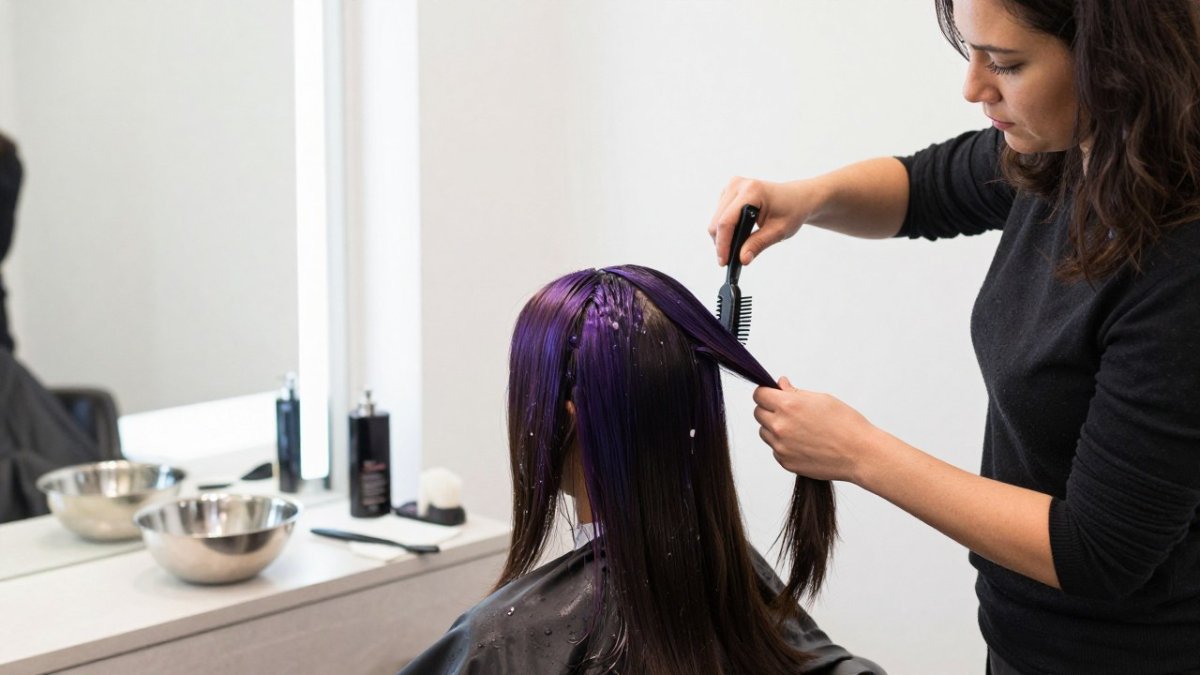
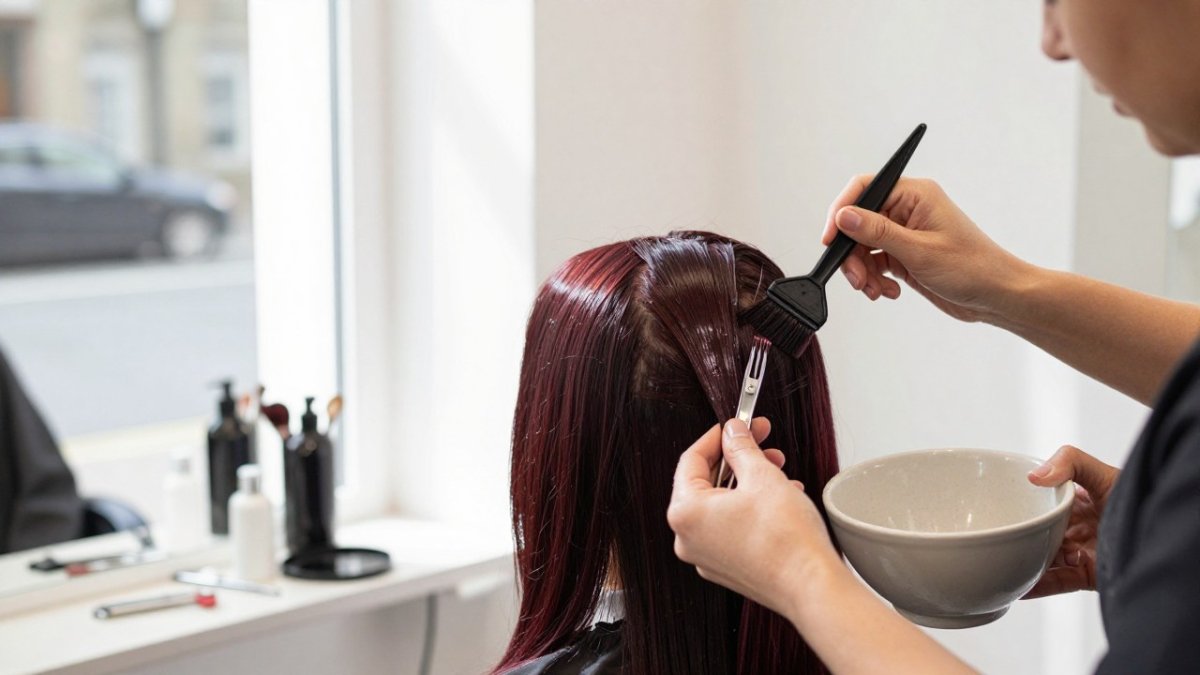
Work on clean, towel-dried hair unless the instructions say otherwise, section it with clips, and apply from mid-lengths to ends first before the roots, since porous ends grab colour faster and need less time. Do not comb through vigorously while the product is on; mechanical stress on wet, damaged hair causes breakage. Do not leave the product on longer than instructed in the hope of a stronger result, on porous hair that usually produces a deeper, flatter tone rather than a longer-lasting one. Rinse with cool water until it runs clear, then skip shampoo for 48 hours.
Aftercare for Coloured, Damaged Hair
Aftercare is where most of the longevity is won or lost. Wash two or three times a week with lukewarm rather than hot water, because heat opens the cuticle and speeds fading.
Watch out: overloading on protein when the hair is actually moisture-deficient makes it stiff and more prone to snapping, so match the treatment to the symptom rather than buying the strongest product on the shelf.
Book a Consultation at a Fulham Salon Before You Colour
A consultation is a good opportunity to assess your hair before colouring. For the wider context on professional colour, our professional hair colour guide for London sets out how we approach bespoke formulations.
Damaged hair does not rule out colour, but it does demand a proper assessment and a formula built around your hair rather than a standard box. At ARQ Hair, we offer Wella Colour expertise, gentle ammonia-free colour options for sensitive scalps, personalised formulas, and pre-booked appointments in our sustainable salon.
Frequently Asked Questions
Is semi-permanent hair dye damaging to already compromised hair?
Semi-permanent colour is the gentlest option for compromised hair because it sits on the surface of the hair shaft rather than lifting the cuticle with ammonia and peroxide. It deposits colour only, so it adds no new chemical breakage. That said, damaged hair is more porous, so it can absorb pigment unevenly and fade faster. A strand test and patch test before application show how your hair will take the shade, and a salon consultation confirms whether your hair is strong enough to colour at all.
How long does semi-permanent colour last on porous, damaged hair?
On healthy hair a semi-permanent colour lasts longer than on porous, damaged or bleached hair, because the cuticle is more open on damaged hair and pigment leaves faster. Washing less often, using sulphate-free shampoo and cooler water slows that fade. Refresh top-ups at the salon every few weeks keep the tone even rather than patchy.
Can I use semi-permanent colour to cover breakage or split ends?
Colour cannot repair breakage or split ends, and it will not hide them for long. Semi-permanent dye can temporarily tint the frayed ends so they look less obvious, but the structural damage remains and splits will travel up the hair shaft. The better order is to trim the worst ends, build condition with a repair treatment, then colour. A stylist can advise how much to take off before your appointment.
How often should I visit a salon for professional colour on damaged hair?
Porous hair fades faster, so it may need more frequent colour refreshes than healthy hair. Between visits, a colour-protection shampoo and a weekly conditioning mask can help.
Comments