
What to expect from a hair colour consultation

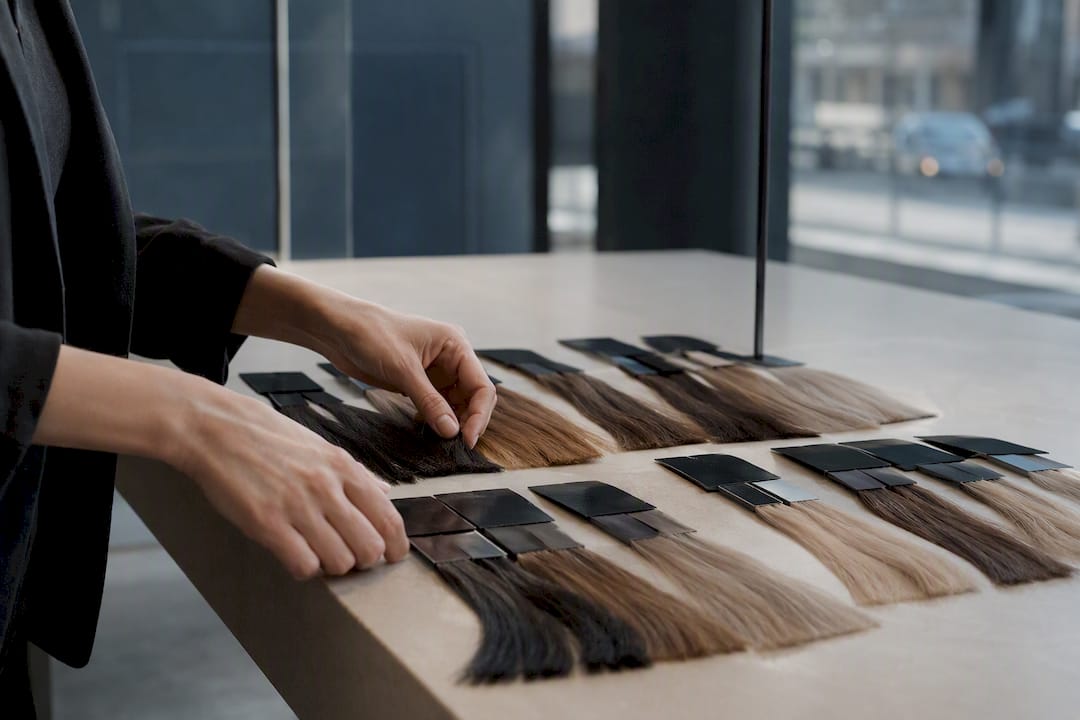
A hair colour consultation is a short, expert assessment that checks your hair’s history, current condition and the shade or technique that will genuinely suit you. Book one before any major change, correction, or first-time grey coverage, and before any correction work. Most salons either offer it free and deduct the cost from your service, or charge a fixed consultation fee for complex cases.
TL;DR:
In-salon consultations provide a hands-on assessment of hair porosity, condition, and strand test results, offering a more reliable diagnosis than online or video methods.
The cost of a consultation varies from free for standard services to higher fees for correction work or specialist advice, with most fees deducted from the final service.
Preparing for a consultation by gathering recent photos, chemical history, and setting maintenance expectations ensures a smoother process and better results.
AI hair color tools can suggest shades based on skin tone and eye color but cannot assess hair health or process, making them useful only as reference points.
Following a colour appointment, waiting at least two weeks between processes and using colour-safe products are crucial for maintaining hair health and achieving the best results.
Table of Contents
What does a hair colour consultation include?
A proper consultation is diagnostic first, aesthetic second. Your colourist needs a clear picture of what your hair has already been through before recommending anything new, and that means working through a specific checklist rather than simply asking “what colour do you want?”
Expect your colourist to check:
Natural level and grey percentage — the base your new colour has to work with, and how much white or grey needs coverage.
Chemical history over the last 12 months — bleach, permanent dye, semi-permanent colour, or relaxers all change how hair reacts to new formulations.
Porosity and elasticity — sometimes confirmed with a strand test, since over-porous hair processes colour faster and can grab pigment unevenly.
Skin undertone, eye colour and contrast level — the visual factors that decide whether a shade will flatter you or wash you out, as explained in this guide to what color jewelry should I wear.
Wardrobe and lifestyle habits — a practical check that gets skipped too often, but colour choices sit differently against the clothes you actually wear.
Before any dye touches your scalp, a patch test is non-negotiable. The NHS advises a 48-hour patch test before every hair dye service, checking for redness, itching or swelling that signals an allergic reaction. A colourist who skips this step, or treats it as optional, is cutting a genuine safety corner.
In-salon consultation vs online or video consultation: what’s the difference?
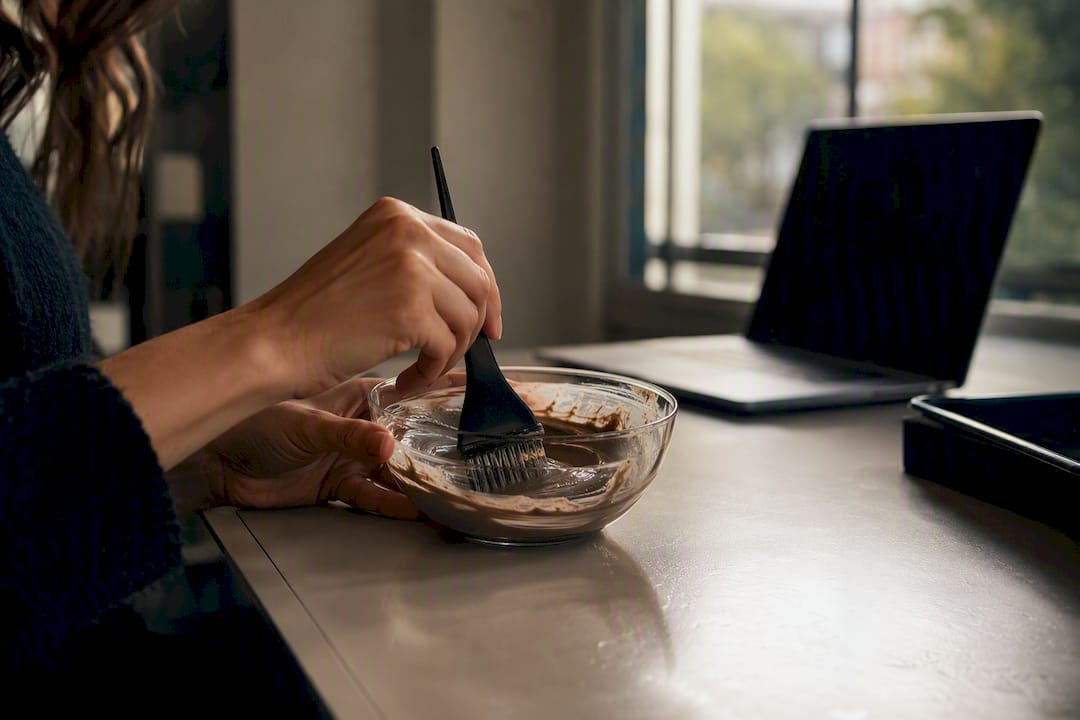
The format you choose shapes how much your colourist can actually diagnose, and that affects how reliable the final plan will be.
In-salon consultations follow a fairly consistent sequence:
Your colourist holds swatches near your face in natural light to judge how a shade reads against your skin and eyes.
A strand test is taken from an inconspicuous section of hair to check how it processes and how long it needs.
Porosity and condition are assessed by hand, since touch reveals things a photo never will.
You leave with a tailored plan: the formulation, an estimated price, and a realistic maintenance schedule.
Online or video consultations work differently, and they lean heavily on you supplying the right material:
You submit photos taken in diffused daylight, no make-up, with hair pulled back so roots are visible.
The colourist reviews your chemical history and desired look remotely, then proposes an initial direction.
Genuine limits apply here. Porosity can’t be checked through a screen, and strand integrity from previous bleaching is easy to miss without a hands-on test.
You typically receive a written plan and a price estimate, but it’s provisional until confirmed in person.
Both formats can produce a solid plan. The difference is that an online consultation is a strong starting point, while an in-salon one is the version that actually locks in the detail.
How much does a hair colour consultation cost?
Pricing models vary more than most people expect, and the differences usually track the complexity of what you’re asking for.
Complimentary consultations are common for standard services, with the cost simply folded into the price of the colour appointment itself.
Fixed-fee specialist consultations tend to apply to correction work or when you’re booking with a senior colourist, reflecting the extra diagnostic time involved.
Paid remote consultations exist too, usually for clients who want expert input before committing to an in-person visit.
Cost climbs with correction work, longer or thicker hair, bespoke formulations, and any additional treatments needed to get hair into a condition that can safely take colour. When you enquire, ask directly whether the consultation fee is deducted from your final bill, and request a written estimate rather than a verbal ballpark. Salons that hedge on this question are usually the ones with the least transparent pricing.
How should you prepare for a hair colour consultation?
Preparation is where you do most of the heavy lifting, and it’s the difference between a consultation that runs smoothly and one that stalls on guesswork.
Gather photos: take them in diffused daylight with no make-up, hair pulled back for a clear root view, plus a couple of images showing the shade you’re aiming for.
Log your product and chemical history: note brand and product names where you can, covering everything applied to your hair in the past 12 months.
Decide your maintenance tolerance: be honest about whether you’ll rebook every six weeks or want something closer to low-maintenance, since this shapes the technique your colourist recommends.
Set a realistic timeline expectation: dramatic changes, especially from dark to light, often need more than one appointment spaced weeks apart.
Pro Tip: Screenshot your product history in your phone’s notes app the moment you switch shampoo, gloss, or box dye. Trying to recall it from memory in the chair almost never works, and it’s the detail that changes a colourist’s formulation the most.
Preparing this way also means less time in the chair spent explaining, and more time spent on the actual colour techniques that will get you the result.
Can AI hair colour tools replace a salon consultation?
Digital colour finders and AI try-on tools have a genuine use, and it isn’t to replace your colourist. Tools like Hairstyle AI’s colour finder take your skin tone, eye colour and undertone and return a personalised palette, which works well as a shortlist before you ever sit in a salon chair.
Where these tools fall short is anything below the surface:
They can suggest a shade family that suits your colouring, but they can’t assess porosity or how your hair will actually process a formula.
They know nothing about your chemical history unless you type it in, and even then, AI consultations can offer product and developer suggestions without the hands-on diagnostics a colourist relies on.
They can’t run a strand test, which remains the only reliable way to judge how previously bleached or over-processed hair will behave.
A coherent but limited signal is the fairest way to describe what these tools offer: useful for narrowing three shades down to one, not for confirming that shade is safe to apply. Bring the output to your consultation as a reference image, not a prescription, and let your colourist confirm it against your actual hair.
What happens after your colour appointment: aftercare and timelines
Colour doesn’t finish working the moment you leave the salon, and the weeks that follow matter almost as much as the appointment itself.
Hair needs recovery time between chemical processes. Dyson’s guidance on hair colour theory recommends waiting at least two weeks between colour applications in most cases, giving hair a chance to rebuild strength before it takes another round of processing. Booking back-to-back sessions to chase a shade faster tends to backfire, both on hair condition and on how evenly the final colour sits.
Aftercare basics worth building into your routine:
Switch to a colour-safe shampoo and conditioner to slow fade.
Book regular conditioning treatments, particularly after lightening services.
Schedule periodic glossing or toning appointments to refresh tone between full colour sessions.
Confirm your patch test was recorded, since a salon keeping that documentation on file speeds up every future visit.
A little consistency here protects the investment you’ve already made, and it’s covered in more depth in this guide to vibrant hair colour.
Why a Wella Colour Expert makes the difference
Credentials matter more in colour work than almost any other salon service, because the margin for error with chemical formulations is genuinely narrow. Wella Colour Expert status signals training on advanced formulation and correction technique, and it’s the standard Arqhair’s colourists work to.
A consultation isn’t a formality before the “real” appointment. It’s the diagnostic step that decides whether the colour actually behaves the way it’s supposed to, and whether your hair comes out of it in better condition than it went in.
At Arqhair, that means bespoke Wella formulations built around your specific hair history, a maintenance plan you leave with in writing, and reference to real case outcomes from previous correction work rather than a generic shade chart. Consultation fees, where they apply, are explained upfront and typically deducted from your booked service. Patch testing and full chemical history documentation happen as standard, not as an afterthought.
A colourist’s honest take on what goes wrong
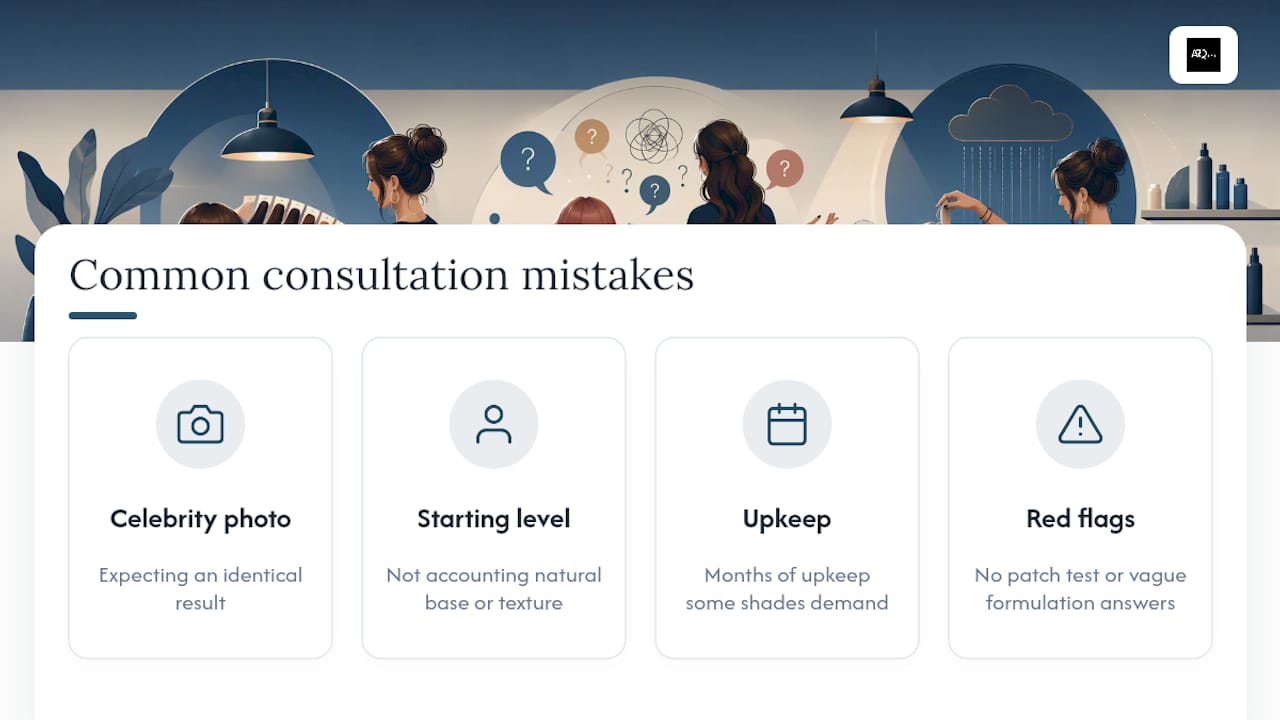
The single biggest mistake clients make is walking in with a celebrity photo and expecting an identical result, without accounting for their own starting level, hair texture, or the months of upkeep some shades demand. Platinum blonde on dark, virgin hair is a process, not an appointment.
Watch for red flags during a consultation: no mention of a patch test, vague answers when you ask what formulation they’re using, or a stylist who steers every conversation back to price rather than your hair’s condition. Those are signs the diagnostic step is being skipped.
If you’re considering a dramatic change, insist on a strand test first. It costs you almost nothing and tells you exactly how your hair will respond before you commit to the full service.
— RICARDO
Book your consultation with Arqhair
Arqhair’s consultation process is built to remove the guesswork that leads to costly correction work later, using Wella formulations matched to your actual hair history rather than a generic shade chart.
At your first appointment, expect a full diagnostic covering natural level, grey percentage, porosity and chemical history, followed by a written plan with realistic pricing and a maintenance schedule you can actually stick to. Consultation costs are explained clearly upfront and, in most cases, deducted from your booked colour service. Bring your recent photos, a note of what’s been applied to your hair over the past year, and a clear sense of how much upkeep you’re willing to commit to. If you’re weighing dimension over flat colour, the same consultation covers balayage and highlights as an option. Every formulation uses professional-grade product, applied with patch testing and documentation as standard. Book your consultation through Arqhair’s colour page and arrive ready to talk through your hair, not just your Pinterest board.
Sources
Recommended
Comments