
Avoid Brassy Hair After Lightening: Salon Hair Gloss vs Toner in Fulham

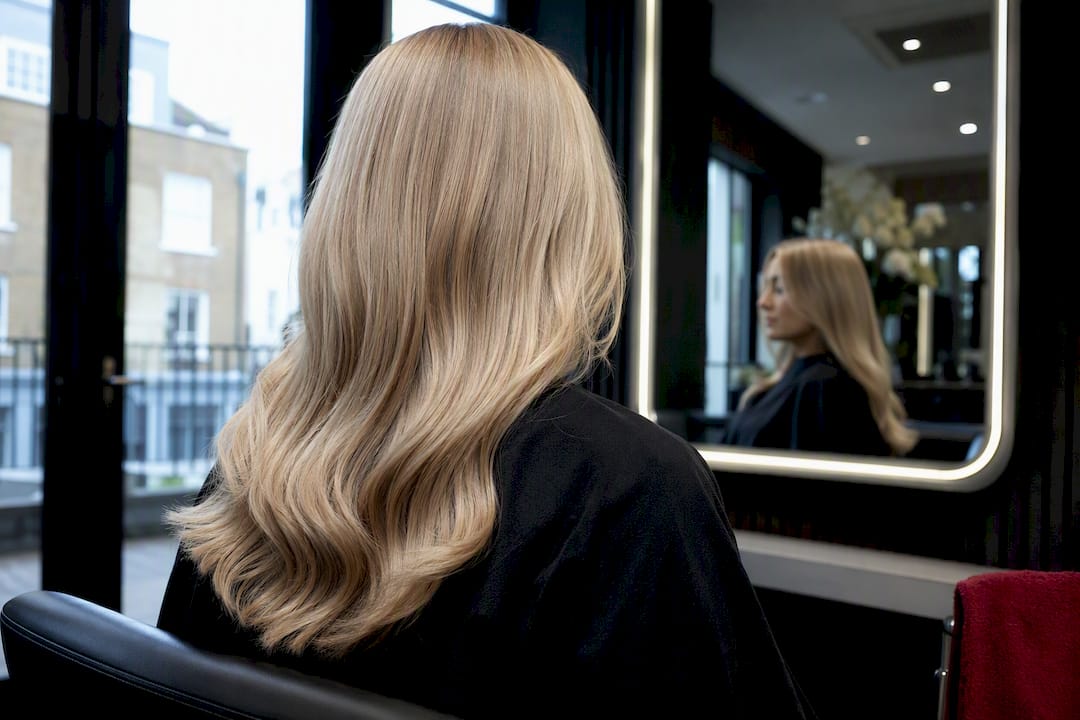
Toner corrects unwanted pigment after lightening, neutralising brass and locking in a precise shade, while gloss adds shine, conditions the cuticle and softly refreshes existing colour. Choose toner when your hair looks brassy or uneven after colouring; choose gloss when the tone is right but the finish looks flat. Salons often combine both, and at-home versions of each exist but fade faster and lack the same precision.
TL;DR:
Toner is ideal for neutralizing brassy, warm undertones after lightening, especially on porous or over-processed hair, to prevent uneven color correction.
Hair gloss offers a temporary shine boost and subtle color refresh, lasting about three to four weeks, with lower risk on damaged or porous hair.
Professional treatments combine toner and gloss for longer-lasting, natural results, whereas at-home products generally lack precision and may fade faster.
Proper assessment of hair porosity and color history is crucial before toning to avoid patchy, over-corrected, or uneven results.
Using cool water and sulfate-free shampoo can extend the longevity of both toner and gloss, but optimal results depend on bespoke formulations devised by professionals.
Table of Contents
What is a hair gloss? Types, chemistry and what it does to hair
A hair gloss is a shine-enhancing, conditioning treatment that coats the cuticle and can deposit a whisper of colour. It comes in two forms: clear gloss, which adds pure shine with no pigment change, and tinted gloss, which subtly refreshes or warms existing colour while it conditions.
In salons, stylists mix demi-permanent gloss formulas tailored to the client’s base shade and porosity. At-home versions, usually gloss washes or glazes, offer a simpler fix between salon visits.
Most professional glosses are acidic, which closes the cuticle rather than lifting it, and this is why glosses feel noticeably smoother after a single treatment. Many modern formulas include conditioning agents and amino acids that improve texture as well as sheen.
Expect realistic results rather than dramatic ones:
Mirror-like shine that shows up best under direct light
A subtle tonal shift, not a colour change, if using a tinted gloss
Softer, more manageable strands immediately after application
Longevity of roughly three to four weeks, depending on porosity, wash frequency and product strength
What is a toner and when do stylists use it?
Toner is a corrective, deposit-only product designed to neutralise unwanted undertones, usually the brassy orange or yellow that surfaces after lightening. Unlike gloss, its job is to fix colour, not simply enhance it.
Formulations vary. Demi-permanent toners often use a low-volume developer to help pigment settle evenly, while acidic, developer-free versions sit more gently on the cuticle. A skilled colourist times the toner immediately after lightening, while the hair’s structure is still open enough to accept pigment evenly.
Toner is the right call when:
Hair has just been lightened and shows visible brass or warmth
A previous colour has faded unevenly, leaving patchy or two-tone results
You’re correcting an at-home colour mishap before it gets worse
Porosity is uneven, meaning some sections will grab pigment faster than others
That last point matters more than most people realise. Overly porous hair can over-absorb toner, leading to patchy, over-corrected colour, which is exactly why a consultation with a professional colourist before toning heavily processed hair is worth the appointment.
Hair gloss vs toner: key differences at a glance
The clearest way to separate these two treatments is by what problem they solve, not how they’re applied.
Factor | Toner | Gloss |
Purpose | Corrects unwanted tone after lifting | Enhances shine, conditions, subtly refreshes colour |
Effect on hair | Deposits pigment to neutralise brass | Smooths cuticle, adds reflective shine |
Typical longevity | A few weeks, fading gradually with porosity | |
Best used | After bleaching, highlights, or colour correction | Between colour appointments, for maintenance |
Damage risk | Higher on porous or over-processed hair | Minimal, generally conditioning |
The two overlap only when hair needs both correction and shine at once, which is common straight after a lightening service. Where they diverge is intent: toner exists to solve a colour problem, gloss exists to finish and protect a colour that’s already correct.
When to choose toner and when to choose gloss
Run through this before booking, or bring it up at your consultation:
Check your last colour service. If you’ve lightened, bleached or highlighted your hair recently, brass is likely, and toner should come first.
Look for uneven tone. Patchy fading or a warm cast that wasn’t there before means correction, not just conditioning.
Assess porosity. Damaged, over-processed hair absorbs pigment unevenly and needs a professional eye before any toner is applied.
Decide your commitment level. If you just want a refresh with minimal fuss, gloss is the lower-maintenance option.
A few real scenarios help this click. Blonde hair with brass a fortnight after highlights needs toner. Brunette hair that’s gone dull and lifeless from sun or product build-up needs gloss. Faded balayage with warm patches usually needs both, toner first, gloss to finish.
As a rough cadence, book toner after any major colour change, and plan glosses for regular upkeep spaced over weeks.
Pro Tip: If you’re unsure whether your hair looks brassy or just dull, check it in daylight rather than indoor lighting. Brass shows warmth; dullness shows a lack of reflection.
How long results last and how to make them last longer
Toner typically holds for a few weeks before fading gradually, largely governed by porosity and how often you wash your hair. Gloss tends to last three to four weeks under normal washing habits, sometimes longer on lower-porosity hair.
Statistic callout: Hot water and sulphate shampoos are two of the fastest ways to strip pigment from both treatments, since heat opens the cuticle and sulphates lift product straight out of it.
To stretch results:
Switch to a sulphate-free shampoo to slow pigment loss
Wash in cool or lukewarm water rather than hot
Use a toning or colour-depositing mask between washes
Space out wash days where practical, since fewer washes means less fade — all key advice on how to maintain results after hair restoration can be found in detail at LIVDOR
Salon vs at-home: the professional view on when to book
At ARQ Hair, consultations start with a porosity and colour history check before any toner or gloss is mixed. The team, made up of Wella Colour Experts, builds bespoke formulas rather than reaching for a one-size mix, which matters enormously on previously lightened or chemically treated hair.
A skilled colourist tones to correct, then glosses to finish. That combination is standard professional practice because it gives a longer-lasting, more natural result than either service alone.
The advantages of going professional show up most clearly on complicated hair:
Precise shade matching using measured, bespoke formulas rather than guesswork
Safer handling of porous or over-processed strands, where over-absorption is a real risk
Access to professional gloss treatments with stronger, longer-lasting pigment than shop-bought versions
At-home gloss products are fine for a quick shine boost on otherwise healthy hair. They’re a poor substitute for toner on freshly lightened or colour-corrected hair, where getting the formulation wrong can set you back weeks.
What does hair actually look like after each treatment?
Freshly toned hair looks cool, clean and even, with brass or yellow tones visibly neutralised and the base shade reading true under both daylight and artificial light. On blonde hair, this often means the difference between a muddy, warm yellow and a crisp, ash or beige finish. On brunettes, toning after lightening typically removes the orange cast that shows up around the mid-lengths and ends.
Glossed hair looks different in character. The colour itself barely shifts, but the surface reflects light far more evenly, so hair that looked flat or slightly dull suddenly reads as healthier and more polished, almost like the difference between matte and satin paint. Tinted glosses add a faint depth, warming or cooling the existing shade by a fraction rather than changing it outright.
Combined, the effect is layered: toner removes the unwanted undertone, then gloss seals that corrected colour under a smooth, reflective finish. This is the look most people associate with “salon fresh” hair, glossy but not artificial, with tone that reads true rather than warm or ashy by accident. It’s also why a colour correction that skips the gloss step can look technically right but visually flat.
Hair gloss vs toner: what the evidence actually supports
Most advice online treats toner and gloss as interchangeable shine fixes, and that’s where readers get misled. Toner is a technical, corrective product with real risk on porous hair. Gloss is a low-risk, largely cosmetic layer. Conflating them leads people to reach for a shop-bought gloss when what they actually need is professional colour correction, or to book an expensive toning service when a simple gloss would have done the job.
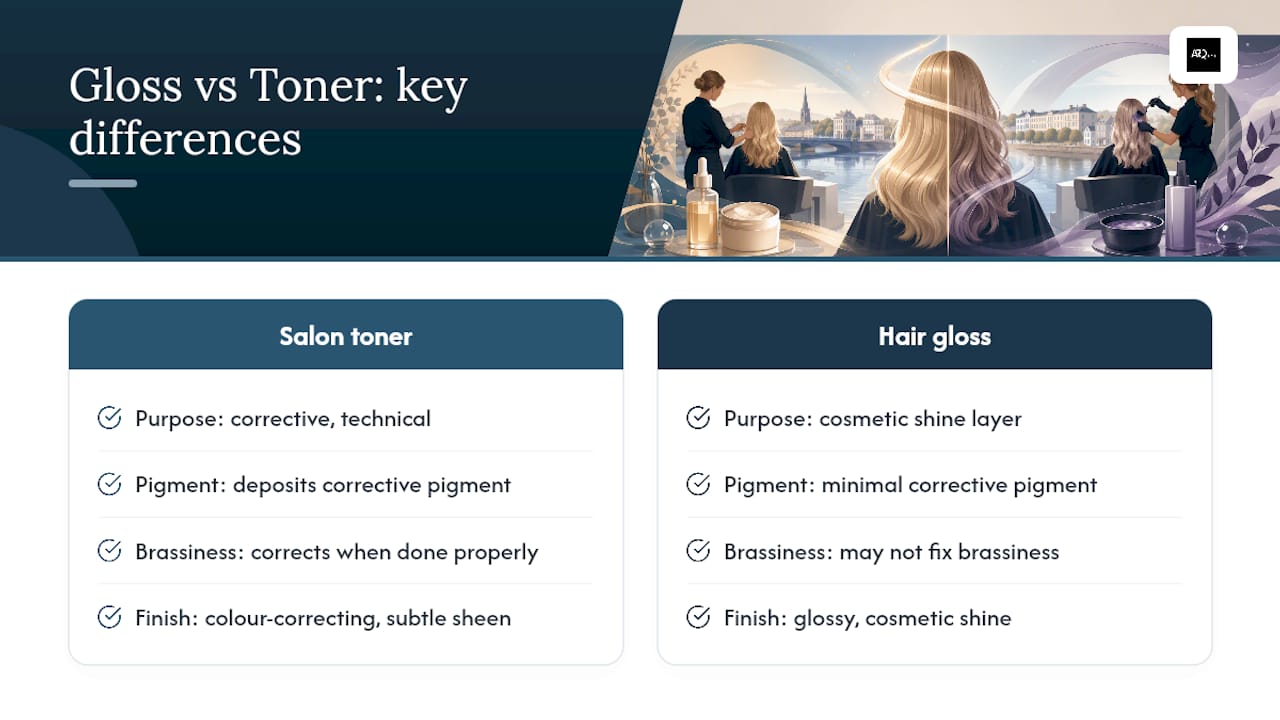
The conventional wisdom oversells DIY toner kits as a like-for-like swap for a salon service. They rarely are, because most at-home kits skip the porosity assessment that determines how much pigment your hair will actually absorb. That’s not a minor detail. It’s the difference between an even, corrected shade and a patchy one.
If there’s one thing to prioritise, it’s the consultation, not the product. Ask what’s happening at the cuticle level before choosing what goes into your hair.
— RICARDO
Book the right treatment with ARQ Hair in Fulham
Arqhair gives you what a shop-bought toner or gloss kit can’t: a bespoke Wella colour formula, mixed for your exact porosity and base shade, applied by colourists who do this daily. Where DIY kits guess, ARQ Hair’s consultations measure, checking your colour history and hair condition before deciding whether you need correction, conditioning, or both.
That matters most if you’ve recently lightened, highlighted, or attempted a colour fix at home and aren’t sure what your hair needs next. Rather than gambling on a boxed toner, book a consultation and let a Wella Colour Expert assess it properly. Explore professional colour services or browse the highlights and balayage options if your next step involves lightening before any toning or glossing begins. Booking a consultation costs nothing and tells you exactly which treatment your hair actually needs.
Sources
Recommended
Comments