
Hair porosity explained: what it means for your routine

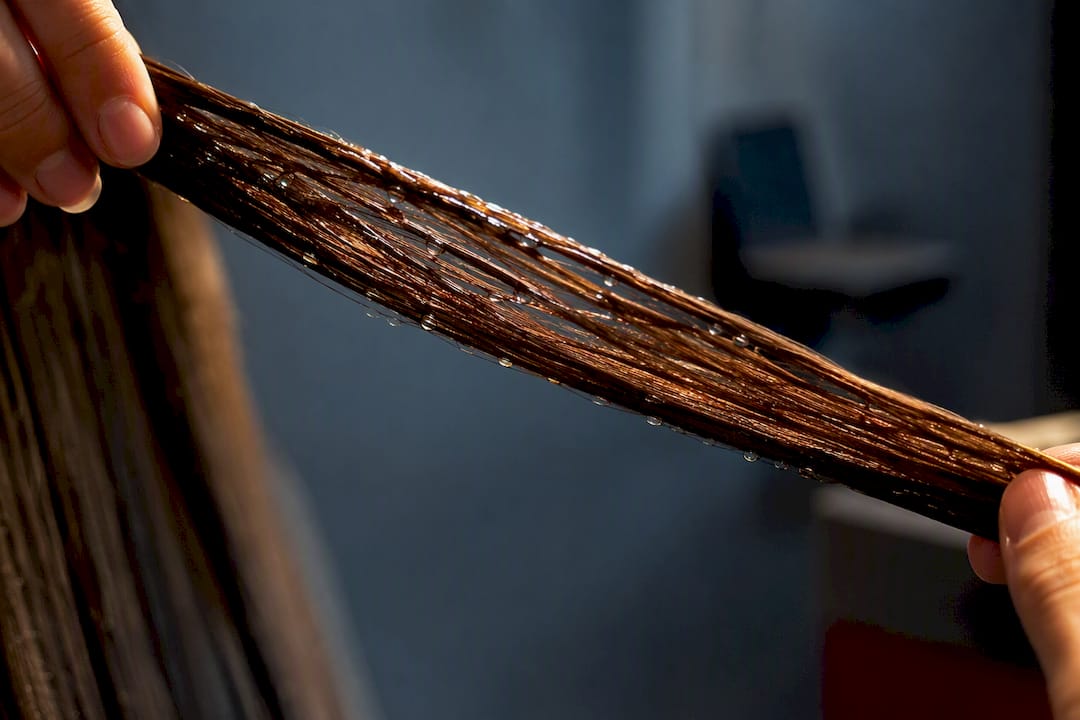
Hair porosity is your hair’s ability to absorb and hold onto moisture, and it’s decided almost entirely by the condition of the cuticle, the outer layer of each strand. Once you know your porosity, choosing the right products and techniques stops being guesswork.
Low porosity: cuticle sits tight, moisture moves slowly in and out
Medium porosity: balanced absorption and retention, considered generally manageable
High porosity: cuticle is lifted or gapped, moisture enters and exits quickly
We’ll walk through the tests worth trusting, the ones to ignore, and how to build a routine around whichever category you land in.
Key Takeaways
Hair porosity is governed by cuticle condition and cuticle lipids, and matching your routine to your actual porosity type, not guesswork, is what makes products finally work as intended.
Point | Details |
Porosity lives in the cuticle | Lipid loss and cuticle gaps from damage raise porosity; genetics set your baseline. |
Skip the float test | Surface tension, residue and strand thickness make it unreliable; trust behavioural observation instead. |
Test multiple sections | Roots and ends often differ in porosity, so test at least two or three areas before deciding. |
Match products to type | Low porosity needs lightweight, water-first formulas; high porosity needs richer creams and protein. |
Treatments help, don’t cure | Bond-repair and protein treatments smooth cuticles temporarily; true repair only comes with new growth. |
Table of Contents
What is hair porosity? Cuticle anatomy explained
Each strand of hair has three layers: the cuticle (the protective outer shell), the cortex (which holds pigment and most of the hair’s strength), and, in thicker strands, a medulla at the core. Porosity lives almost entirely in that outer cuticle, which is made of overlapping scale-like cells held together by lipids, including a key fatty compound called 18-MEA. When those scales lie flat and the lipid layer is intact, moisture struggles to get in or out. When the scales are lifted, chipped, or the lipid cement has worn away, water moves through far more freely.
Researchers studying hair structure and cuticle chemistry confirm that porosity is fundamentally about how these cuticle layers and lipids interact with water. Labs measure this with tools like scanning electron microscopy and FTIR spectroscopy, mapping cuticle gaps and lipid loss with real precision, according to Typology’s technical overview. You don’t need any of that equipment. Everyday observation, done properly, tells you almost everything you need to know.
What causes low or high porosity in the first place
Some of this is simply genetic. The natural tightness of your cuticle and the density of your hair’s lipid layer are largely inherited traits, which is why porosity often runs in families and can even vary between siblings.
Everything else is acquired. Bleaching, repeated colour services, chemical relaxers and perms all strip cuticle lipids and can leave physical gaps in the cuticle surface, and heat styling accelerates the same damage. Dyson’s research on hair porosity confirms that this kind of cuticle disruption is precisely what pushes hair towards higher porosity. UV exposure, swings between humid and dry air, chlorine, hard water minerals and plain old friction from towels or rough brushing all add up too. Product buildup, meanwhile, can mimic low porosity symptoms even on hair that’s naturally more porous, which is why testing on clean strands matters so much.
How to test your hair porosity at home
Test on hair that’s freshly washed with no product residue, and check more than one section, since porosity often varies across your head.
The finger slide test. Take a dry strand and slide two fingers from the ends towards the scalp. Smoothness suggests low porosity; roughness or bumps suggest raised cuticles and higher porosity.
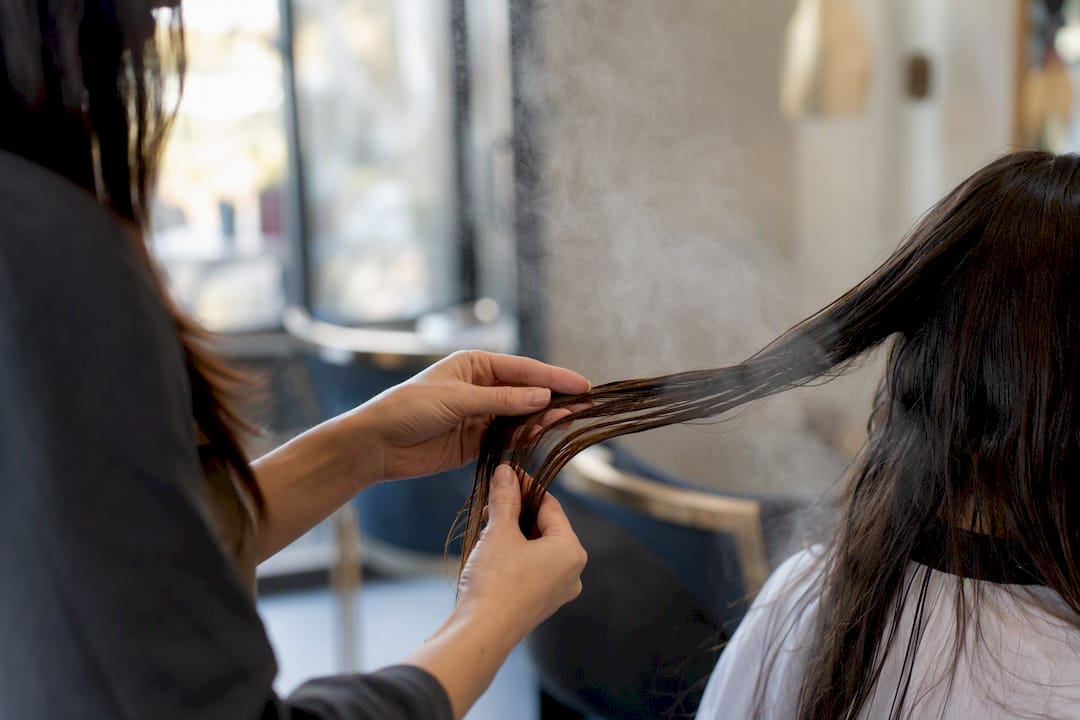
The spray test. Mist a clean, dry section with water and watch it. Beading or sitting on the surface points to low porosity; fast, even absorption points to high porosity.
The shower observation test. Notice how your hair behaves when wet. Slow to saturate and slow to dry usually means low porosity; quick to soak and quick to dry usually means high.
The float test. A strand dropped in a glass of water either sinks (allegedly high porosity) or floats (allegedly low). Treat this one with real scepticism, more on that shortly.
Ranked by reliability, the spray and shower observation methods come out on top, according to Curls Guide’s assessment of home porosity tests, because they mirror how your hair actually behaves with real products in daily life. The finger slide test is a useful supporting check but can be thrown off by thick or coarse strands. The float test sits at the bottom of the list.
Pro Tip: Test three strands from different areas, crown, mid-length side, and nape, since roots are frequently lower porosity than damaged ends even on the same head.
Low, medium and high porosity: how to spot each one
Once you’ve tested a few sections, match what you saw against these patterns.
Low porosity hair tends to bead water on the surface before slowly absorbing it. It can take a while to get fully wet in the shower and just as long to dry afterwards. Products often sit on top rather than sinking in, which shows up as buildup, a waxy feel, or hair that looks flat despite light styling. On the plus side, low porosity strands usually have a naturally glossy, reflective surface, because that tightly sealed cuticle bounces light well.
Medium porosity hair, sometimes called normal porosity, absorbs moisture at a reasonable pace and holds onto it without much fuss. It takes colour evenly, holds styles reasonably well, and generally responds predictably to whatever you put on it. This is the porosity type that needs the least troubleshooting.
High porosity hair soaks up water and product almost instantly, but loses both just as fast. Expect:
Frizz that reappears within hours of smoothing
Tangling that seems to get worse rather than better through the week
Colour that fades or dulls noticeably faster than expected
A rougher, more matte texture along damaged sections
It’s worth remembering that porosity isn’t necessarily uniform from root to tip. Curls Guide’s research on testing across the head notes that damaged ends frequently sit at a different porosity level than newer growth closer to the scalp. That’s exactly why professional consultations often treat ends and roots as separate problems rather than applying one blanket treatment across the whole head.
Building a routine around your porosity type
Your porosity type should decide product weight, application order and how often you reach for protein, not just which brand you buy.
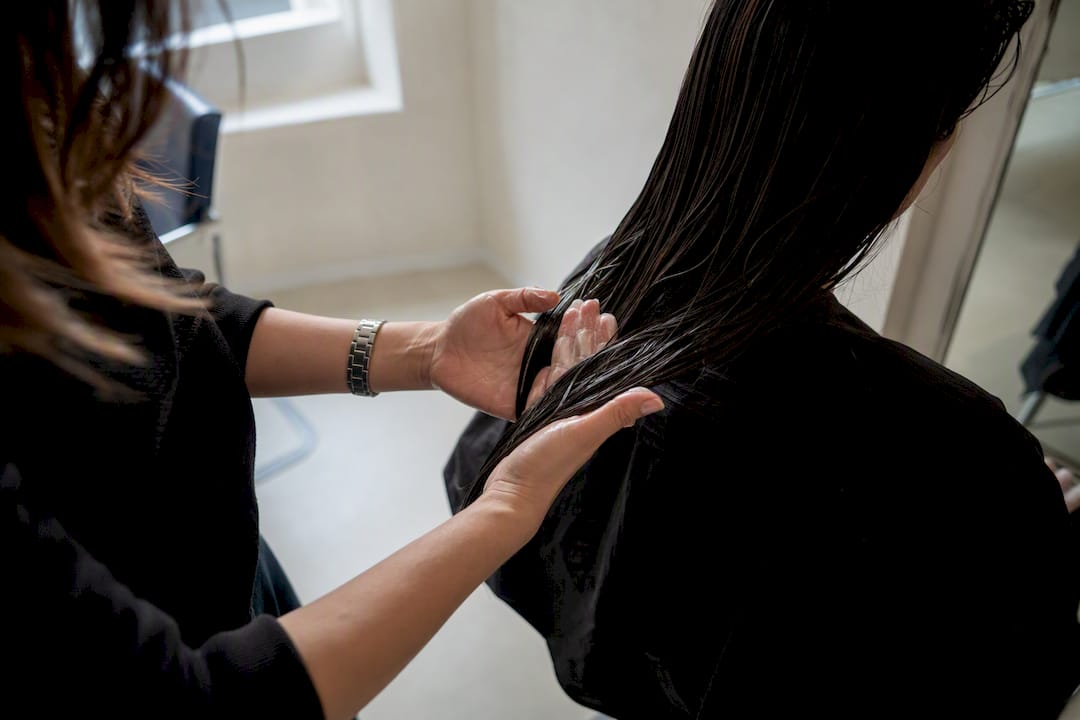
For low porosity hair, lean on water-first, lightweight formulations rather than heavy butters, which tend to sit on the surface instead of penetrating. Humectants like glycerin work well here because they draw moisture towards a cuticle that’s naturally reluctant to let it in. L’Oréal Professionnel’s guidance on porosity recommends gentle heat or steam during masks, since warmth temporarily lifts the cuticle just enough for product to get through. Dyson’s insights on heat and cuticle behaviour back this up: controlled, even heat improves absorption with far less collateral damage than high, unmanaged heat.
For medium porosity hair, alternate moisture-focused and protein-focused treatments rather than defaulting to one or the other. Watch for early signs of imbalance, limpness suggests too much protein, while stretchiness or breakage suggests too little.
For high porosity hair, richer creams, butters and sealing oils matter far more, and regular protein or bond-repair treatments help slow further moisture loss. Layering technique matters too:
LOC method (Liquid, Oil, Cream) tends to suit high porosity hair, since the oil helps seal in the water-based liquid before the cream locks everything down.
LCO method (Liquid, Cream, Oil) can work better on finer high porosity strands where a heavier final layer would weigh hair down.
Ease off humectants in very humid weather regardless of porosity type, since overly porous hair will pull in excess atmospheric moisture and frizz regardless of what you’ve applied.
Pro Tip: If your ends are noticeably more porous than your roots, apply protein treatments only from mid-length down rather than across the whole head, one of the more overlooked adjustments in home haircare.
Can hair porosity actually change?
Porosity is largely fixed by genetics, but damage genuinely raises it, and that part is reversible in behaviour, if not in the strictest structural sense. Protein and bond-repair treatments can temporarily fill gaps in the cuticle and smooth its surface, improving how hair looks and feels for weeks at a time. Colour glossing services can have a similar smoothing effect.
None of this reverses porosity permanently. According to Curls Guide’s research on treatment expectations, genuine repair of cuticle damage only happens through new growth, so the improvements from treatments are real but temporary, and protective habits are what stop the damage from returning. If you’re dealing with persistent breakage, uneven colour absorption or a texture that no amount of home treatment seems to fix, that’s the point to bring in a professional rather than keep experimenting.
The salon view: how Arqhair reads porosity in the chair
At Arqhair, we assess porosity the way it actually behaves, not just how it looks. That means checking how hair responds to water, to gentle stretching, and to steam during a treatment, alongside a visual read of shine and texture along the strand. When damage is uneven or colour keeps grabbing unpredictably, that’s usually when a bespoke consultation, rather than another product swap, gets you further. Our smoothing and texture services and bond-repair treatments are built around exactly this kind of section-by-section assessment.
Why the float test keeps failing you
The float test survives because it’s simple: drop a strand in water, watch whether it sinks or floats, done. That simplicity is also its downfall. HairTrait’s analysis of the float test points to three problems that repeatedly distort the result. Surface tension can hold a strand at the surface regardless of actual porosity, especially with finer hair. Product residue, even from a wash days earlier, changes how a strand interacts with water entirely. And strand thickness matters more than most people realise, a thick, coarse low porosity strand can sink simply due to weight, not because water has penetrated the cuticle.
Many trichologists now prefer behavioural observation over buoyancy for exactly this reason, according to HairTrait’s research: how hair actually performs with real water and real product predicts your day-to-day experience far better than whether a single strand sinks in a glass. If you want a genuinely reliable read, combine the spray test with a few days of honest observation, how fast your hair wets in the shower, how fast it dries, whether product sits on top or sinks in. Do this across two or three sections of your head, not just one strand, and you’ll get a picture that actually matches how your hair behaves when you’re not testing it. Techniques like hair plopping can double as an informal porosity check too, since how quickly hair dries when wrapped in a microfibre towel often mirrors what the spray test tells you.
If your at-home routine isn’t giving you the answers you need, or if what you’re seeing points to damage rather than genetics, booking a consultation gets you a far more precise read than another round of glass-and-water testing. Our team can assess porosity properly and recommend whether colour correction, balayage, or a restorative cut through cutting and styling is the better next step for your hair specifically.
What the porosity conversation gets wrong
The float test dominates search results and social media advice for one reason: it looks scientific and takes ten seconds. It’s also the least trustworthy method available, and the fixation on it has crowded out the tests that actually work. Behavioural observation, how hair wets, dries and holds product over a few honest days, tells you more than any glass of water ever will.
The bigger gap in most porosity advice is treating it as one fixed label for your whole head. It isn’t. Ends and roots frequently sit at different porosity levels on the same person, and routines built around a single “type” often under-treat damaged sections while over-treating healthy ones. If there’s one change worth making today, it’s testing section by section rather than once.
Where I’d push back hardest on conventional wisdom: people chase permanent porosity fixes that don’t exist. Treatments smooth and improve behaviour temporarily. They don’t rewrite your cuticle’s genetics. Once damage is doing real, visible harm, that’s a job for a professional consultation, not another product swap.
Frequently asked questions
What is hair porosity in simple terms? Hair porosity is how easily your hair absorbs and holds onto moisture, controlled by how tightly the cuticle’s outer scales sit against the strand.
How can I tell my hair porosity without buying anything? Wash your hair with no product, then watch how it wets and dries in the shower, and mist a dry section with water to see whether it beads or absorbs quickly.
Is the float test accurate for checking porosity? Not reliably. Surface tension, leftover product and strand thickness all distort the result, which is why behavioural observation tends to be trusted more.
Can I change my hair porosity permanently? Not entirely. Genetics set your baseline, and while treatments can temporarily smooth cuticle damage, full repair only happens as new hair grows in.
Does porosity differ across one person’s head? Yes, often significantly. Ends that have seen more colour, heat or styling frequently sit at a higher porosity than roots closer to the scalp.
Sources
Recommended
Comments