
72 Hour Salon Checklist for Keratin Treatment Aftercare

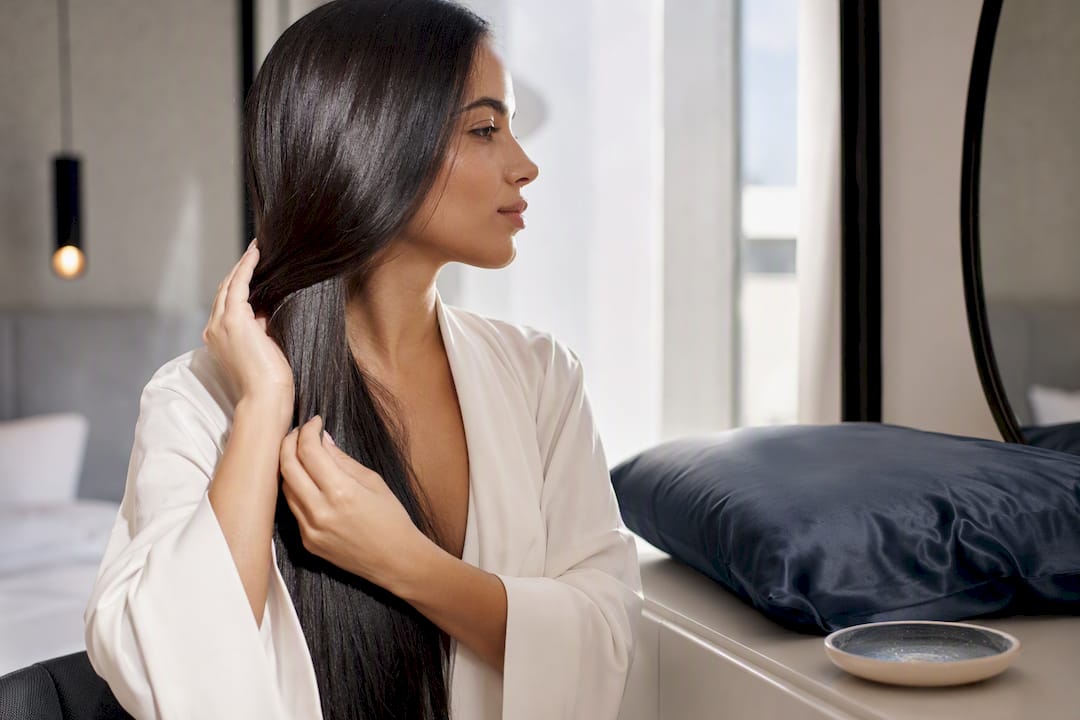
Follow your salon’s written first-wash instructions above any generic rule you read online, because most keratin formulas need 48 to 72 hours to bond fully before water touches your hair. Beyond that waiting window, longevity comes down to four habits: sulphate-free products, gentler heat styling, careful swimming precautions, and reduced friction while you sleep. Get those right and your treatment can hold its shape for months rather than weeks.
TL;DR:
Waiting at least 48 to 72 hours before washing or wetting hair is crucial, with exact timing depending on your salon’s specific instructions.
Use sulfate-free shampoo and conditioner, avoid salt water and chlorine, and always apply a heat protectant to extend treatment longevity.
Reducing friction by sleeping on silk or satin and avoiding tight hairstyles helps maintain smoothness for several months.
Protect your hair from heat styling at lower temperatures and always use a heat protectant to prevent patchy fading of the keratin treatment.
Regular touch-ups are typically needed every three to six months, with signals like increased frizz or uneven texture indicating it is time to rebook.
Table of Contents
Keratin treatment aftercare: the do’s and don’ts at a glance
What happens in the first 72 hours, and what if your hair gets wet?
Styling and heat: what settings actually protect your results
How long does a keratin treatment last, and when should you book a touch-up?
Expert notes from a professional salon: what to ask your stylist before you leave
Keratin treatment aftercare: the do’s and don’ts at a glance
Before anything else, run through this checklist. It covers the first days and the weeks that follow, and it’s worth keeping somewhere you’ll actually see it, like a phone note or a fridge magnet.
Wait at least two days before washing or wetting your hair, but always confirm the exact figure with your salon.
Keep hair down for that same window. No clips, no ties, no headbands, no tucking it behind your ears repeatedly.
Switch to sulphate-free shampoo and a compatible conditioner once you’re cleared to wash.
Use a heat protectant every single time you reach for straighteners, tongs, or a hairdryer.
Stay out of chlorine and salt water unless you can rinse and protect properly first.
Sleep on silk or satin, not cotton, to cut down on overnight friction.
Wash less often than you used to. Two to three times a week is typical for most keratin clients.
What happens in the first 72 hours, and what if your hair gets wet?
The waiting period exists because the keratin bond is still setting. Some formulas cure faster than others, which is exactly why salon protocols vary and why your stylist’s written instructions take precedence over a blanket rule found on a blog. A gentler, more natural-looking formula might clear you at 24 hours; a stronger smoothing system might need the full 72.
Here’s a simple way to track it:
Day 0 (treatment day): avoid ponytails, exercise, and any styling that creases the hair.
Day 1: keep hair straight and down; avoid steam rooms, saunas, and hot showers that create steam near your head.
Day 2: continue avoiding sweat-heavy exercise; light activity is fine if hair stays dry and loose.
Day 3 to 4: most clients get the all-clear to wash, following your stylist’s specific instructions.
If your hair gets caught in rain or unexpected sweat during this window, don’t panic. Blot it dry immediately with a soft towel, avoid rubbing, and if you have access to a hairdryer, use the lowest heat setting to smooth it back into place rather than letting it dry in a bent or creased shape.
Washing and product choices after the waiting window
Once your salon gives you the green light, technique matters almost as much as timing. Wash with lukewarm water rather than hot, which can open the hair cuticle and work against the smoothing effect. Apply shampoo at the scalp only, let the suds run down through the lengths, and concentrate conditioner on the mid-lengths and ends where the hair needs it most. Skip the vigorous towel scrub and blot instead.
Your aftercare kit should include:
A sulphate-free shampoo formulated for chemically treated hair.
A compatible conditioner, ideally from the same product line as your treatment.
A weekly mask for added moisture and slip.
A leave-in serum to manage frizz between washes.
A heat protectant spray for any styling tool.
Confirm compatibility before you buy anything. Products labelled “keratin” on the shelf don’t automatically work with a professional smoothing service, and the wrong formula can undo weeks of results in a single wash.
Pro Tip: Check the ingredients list on any new bottle for formaldehyde, formalin, or methylene glycol. If you see any of those names, put it back on the shelf, no matter how convincing the marketing sounds.
Sulphate-free advice is common salon guidance, but so is a caution around sodium chloride in some product lines. Ask your stylist which restriction applies to your specific formula rather than assuming one rule fits every brand. The stakes are real: partner salons working with GK Hair have reported a 40% drop in treatment longevity among clients who skipped the recommended waiting window, which gives you a sense of how much that first decision actually matters.
Styling and heat: what settings actually protect your results
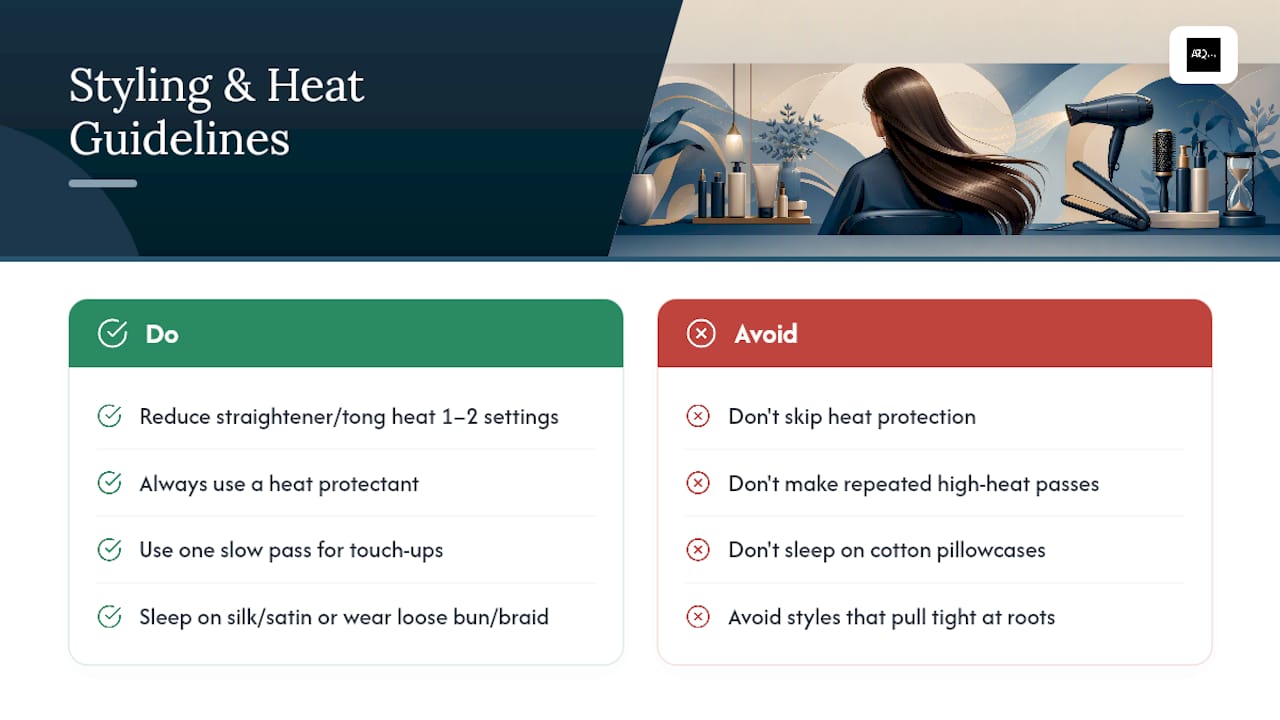
Treated hair tolerates far less heat than it did before your appointment. Drop your straightener or tongs down by at least one or two settings from what you used pre-treatment, and never skip the heat protectant, even for a “quick” five-minute style. Heat protection isn’t optional on smoothed hair; it’s the difference between your finish lasting months and fading within weeks.
If you need to touch up a section, one careful, slow pass beats three rushed ones. Repeated passes at high heat are one of the fastest ways to degrade a keratin finish, section by section, without you noticing until the whole style looks patchy.
At night, swap your cotton pillowcase for silk or satin. Cotton grips hair and creates friction while you sleep, which shows up as frizz and flyaways within days. Once you’re past the initial setting window, a loose low bun or a loose braid works well too, provided nothing pulls tight at the roots.
Swimming, exercise and environmental risks
Chlorine and salt water are two of the fastest ways to strip a keratin finish, so a little preparation goes a long way. Before you get in the pool or the sea, wet your hair with clean fresh water first so it absorbs less of the chlorinated or salty water, and wear a swim cap if you have one. Rinse thoroughly the moment you’re out, and hold off on shampooing until your salon’s guidance allows it.
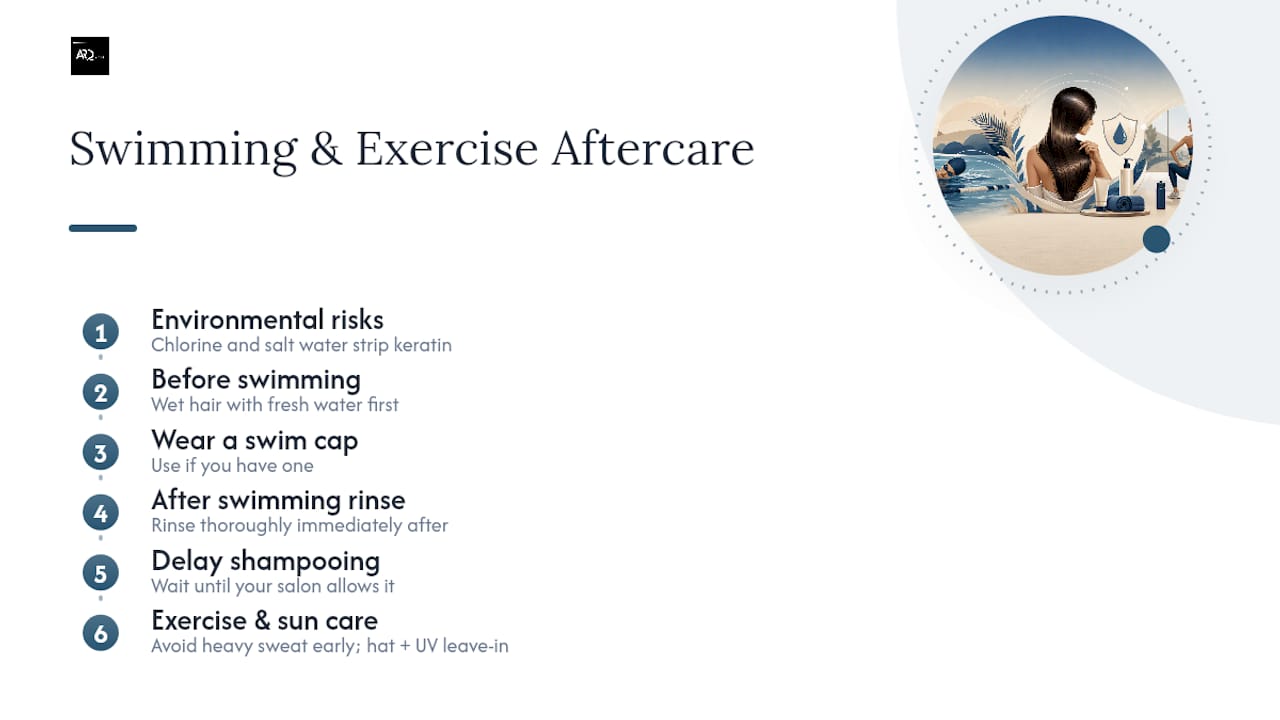
For exercise, avoid anything that produces heavy sweat during the first few days after treatment. Once you’re past that window, tie hair back loosely or wrap it in a silk scarf rather than letting sweat sit against smoothed strands. On long days outdoors, a hat and a leave-in product with UV protection help guard against sun fade and dryness, both of which shorten how long your treatment looks fresh.
How long does a keratin treatment last, and when should you book a touch-up?
Most keratin treatments hold for three to six months, though where you land in that range depends heavily on your lifestyle and product choices. Frequent salt exposure, daily heat styling, and washing too often all shorten the timeline. Sticking to the aftercare routine above tends to push you toward the longer end.
Watch for these signals that it’s time to rebook:
Frizz creeping back in, especially around the crown or hairline.
Uneven texture, where some sections feel smoother than others.
Visible root growth that breaks up the overall finish.
Between visits, keep washing to two or three times a week, use your weekly mask, and only clarify your hair if your stylist has specifically told you to. If you’re already noticing damage alongside the fade, a repair-focused treatment can help bridge the gap before your next smoothing session.
Expert notes from a professional salon: what to ask your stylist before you leave
Generic timelines are a starting point, not a rulebook. Formula strength, your natural hair texture, and even the humidity on treatment day all shift the numbers slightly, which is why the single most reliable reference point is your stylist’s written aftercare sheet, not a forum post or a blog you found at midnight.
Before you leave the chair, ask for three things: the exact name of the service used, the ingredient list or product line, and a home-care recommendation that’s confirmed compatible with your treatment. At ARQ Hair, our Wella Colour Experts build that guidance into every keratin smoothing consultation, drawing on decades of family-run salon craftsmanship rather than a one-size-fits-all leaflet.
A stylist’s one habit that saves treatments
The clients whose keratin results fade fastest almost always share one thing in common: they treat the first week like it’s over the moment the smell fades. It isn’t. The habit I push hardest, beyond the shampoo swap, is pairing a silk pillowcase with a pre-swim rinse routine from day one, not week three. It’s a small adjustment, but it’s usually the difference between a treatment that holds for six months and one that’s frizzy again by month two.
— RICARDO
Sources
Ready for a professional touch-up or your first keratin smoothing service? Explore ARQ Hair’s smoothing and texture treatments in Fulham, where every service comes with a personalised home-care plan built around your exact formula. For broader salon education on product compatibility, resources like Lumari Pro are a solid starting point too.
FAQ
How do I take care of my hair after a keratin treatment?
Wait the full 48 to 72 hours your salon recommends before washing, then switch to sulphate-free shampoo, use a heat protectant every time you style, and avoid chlorine, salt water, and tight hairstyles in the early weeks.
What should I avoid doing after a keratin treatment?
Avoid washing too early, tying hair up or clipping it back during the initial setting window, swimming without rinsing and protecting your hair first, and using high heat without a protectant spray.
Can I tie my hair up after three days of keratin treatment?
Most formulas allow loose styling after the initial 48 to 72 hour window has passed, but confirm with your stylist first since some treatments need slightly longer to fully set.
Do I really need to wait three days to wash my hair after keratin treatment?
Yes, in most cases. Skipping or shortening the waiting period interferes with the bonding process, and salon partners have reported a 40% drop in treatment longevity among clients who washed too soon.
Recommended
Comments