
Match Your Booking Cycle: Taper vs Fade for Men, 4–6 vs 1–3 Weeks

Choose a taper if you want low maintenance and a professional, understated finish. Choose a fade if you want bold contrast and a sharper, more modern edge. A taper needs a barber visit roughly every 4 to 6 weeks and never goes to bare skin, while a skin fade needs touch-ups every 1 to 3 weeks to stay sharp. If you cannot decide, a taper fade sits comfortably between the two.
TL;DR:
Men with busy schedules should opt for a taper, as it lasts 4 to 6 weeks without showing harsh growth lines.
Skin fades require touch-ups every 1 to 3 weeks to maintain their sharp contrast and clean appearance.
A taper suits most hair textures and face shapes by softening features and growing out gracefully without revealing skin.
Selecting a fade depends on preference for high contrast and frequent upkeep, typically needed every 1 to 3 weeks.
Clear communication about fade placement and height ensures the desired style, whether taper or fade, matches real rebooking habits.
Table of Contents
What is a taper haircut, and why does it grow out better?
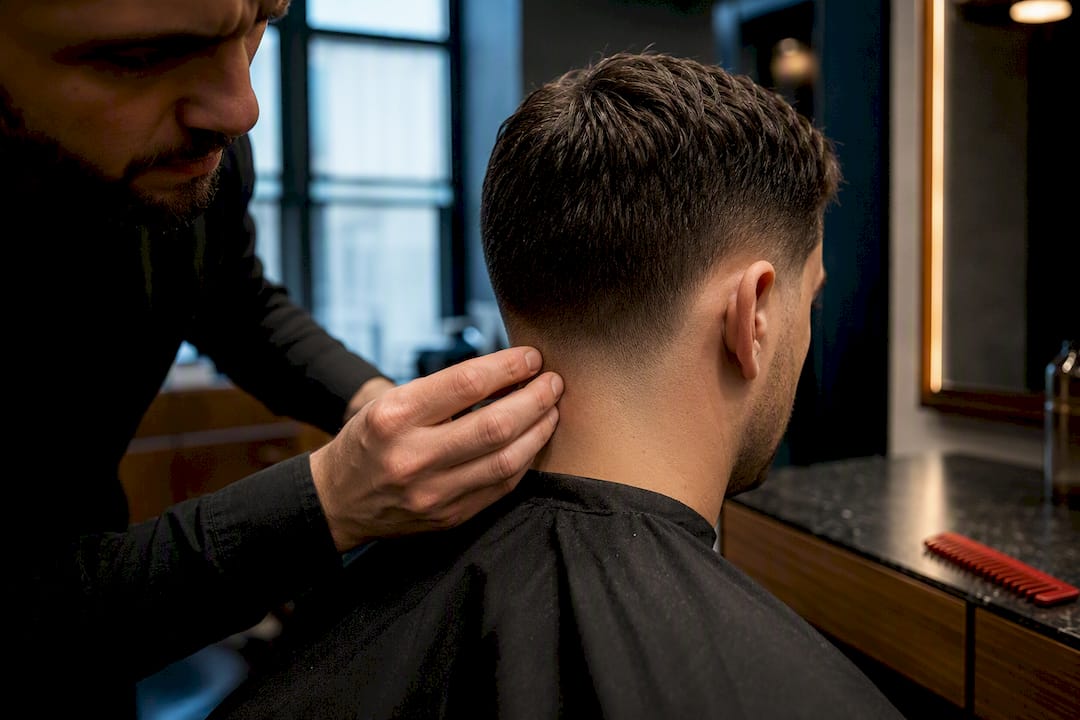
A taper is a gradual shortening of hair as it moves down towards the ears and nape, without ever exposing bare skin. The hair simply gets shorter, not shorter and shorter until it disappears. That single distinction is why a taper reads as neat rather than sculpted, and why it survives weeks of regrowth without looking messy.
Barbers usually cut a classic taper with scissor-over-comb work, sometimes finishing the very base of the neckline with clippers to sharpen the edge. Clipper guards come into play on shorter, more uniform tapers, but scissors do the heavy lifting on anything with length left on top. That is partly why a good taper takes real technical skill: there is nowhere to hide an uneven blend when the tool is a comb and a pair of shears rather than a machine set to a fixed guard.
A taper suits men who want a haircut that reads as professional in a boardroom and doesn’t scream for attention on a Monday morning three weeks after the last cut. It’s the safer choice for conservative dress codes, client-facing roles, or anyone who simply resents spending every second Saturday in a barber’s chair.
Grows out gracefully. Because it never touches skin, there’s no harsh demarcation line to grow out awkwardly.
Lower visit frequency. Most men stretch a taper to 4 to 6 weeks between cuts.
Works with most hair textures. Straight, wavy, and thicker hair all sit well with a tapered silhouette.
Styling stays simple. A light pomade or matte clay is usually all it needs to hold shape day to day.
The trade-off is contrast. A taper flatters and refines, but it does not deliver the sharp geometric lines that make a fade stand out across a room.
What is a fade haircut, and where does the skin fade fit in?
A fade blends hair down to very short lengths, and in its most extreme form, all the way to bare skin. That’s the entire appeal: a fade creates a visible line of contrast between long hair on top and closely cropped or shaved sides, which is exactly what a taper deliberately avoids.
Placement changes everything about how a fade behaves and who it flatters:
Low fade starts just above the ears, offering the mildest contrast and the most forgiving grow-out.
Mid fade begins around temple height and is widely considered the safest all-round choice, working across most face shapes and top styles.
High fade starts higher up the head, delivering maximum contrast and a bolder, more editorial finish.
A true skin or bald fade needs a zero guard on the clippers, followed by a razor or foil shaver to finish the last few millimetres against the skin. That precision is exactly why the style needs more frequent upkeep. Barber educators point out that placement, not the label on the style, is what actually determines the outcome, so telling your barber exactly where the blend should start and end matters more than the word “fade” itself.
Men who choose fades tend to prioritise visual impact over convenience: creative industries, younger clients, and anyone who enjoys the ritual of a fortnightly barber visit. The upkeep is real. A skin fade needs touch-ups every 1 to 3 weeks to keep that sharp line from blurring into an untidy halo of regrowth.
Taper fade, skin taper, drop fade: what’s the difference?
The overlapping names cause most of the confusion in this category, so it helps to separate the four you’ll actually hear at a barbershop.
Taper fade. A gradual taper on the sides that steps down into a shorter fade at the base. It’s a genuine hybrid rather than a compromise cut, giving you the low-key grow-out of a taper with a slightly crisper finish near the neckline.
Skin taper. A taper that fades right down to skin at its shortest point rather than stopping short. It reads sharper than a standard taper but still keeps most of the gentle, gradual blend up top.
Drop fade. The fade line curves downward behind the ear rather than running in a straight horizontal band. It suits rounder head shapes and adds a slightly more sculpted, three-dimensional look.
Burst fade. The fade circles around the ear in a semicircle instead of extending in a straight line across the head, usually paired with longer hair on top. It’s a strong option for curly or textured hair worn longer.
If you want a genuine middle ground, the taper fade is the easiest recommendation. It’s a common compromise for men who like the definition of a fade but can’t commit to fortnightly appointments. Drop and burst fades are worth mentioning to your barber only if you already know you want a fade and simply want the line to follow your head shape rather than a flat plane.
Fade vs taper: contrast, upkeep and who each one suits
The clearest way to separate a taper from a fade and its hybrids is to compare them against the four things that actually affect your day-to-day experience.
Factor | Taper | Fade | Taper fade |
Visual contrast | Low. Hair shortens gradually, never to skin. | High, especially mid or high skin fades. | Medium. Sharper than a taper, softer than a full fade. |
Maintenance window | 4 to 6 weeks | 1 to 3 weeks for skin fades | 2 to 4 weeks |
Best for | Conservative dress codes, busy schedules, classic styling | Creative roles, bold styling, frequent barber visits | Men who want modern definition without weekly upkeep |
Tools required | Scissor-over-comb, occasional clipper finish | Clippers with a zero guard, plus razor or foil shaver for skin | Clippers throughout, with careful guard transitions |
A taper suits rounder or squarer faces because it softens the jawline rather than sharpening it further. A fade, particularly a high fade, tends to elongate the face and works well on those with fuller cheeks who want a leaner appearance. Straight, thick hair holds a crisp fade line more easily than fine or curly hair, which can blur the blend faster and demand more frequent touch-ups regardless of the style chosen.
How to choose between a taper and a fade
Work through this before you sit in the chair, and you’ll leave with a cut that actually matches your life rather than a photo you saw online.
Start with the honest question: how often can you realistically get to a barber? If the answer is “whenever I remember,” a taper is the forgiving choice. If you enjoy the ritual and can commit to every two or three weeks, a fade rewards that commitment with sharper definition.
Workplace dress code. Conservative or client-facing roles usually favour the understated taper.
Hair texture. Curly and coarser textures often suit a taper’s gentler blend better than a crisp skin fade, which shows regrowth and frizz faster.
Face shape. Rounder faces benefit from a softening taper; leaner faces can carry the added contrast of a fade.
Budget over time. More frequent fade appointments mean higher annual spend, even if each visit costs the same.
If your hair has a stubborn growth pattern, such as a persistent cowlick at the crown, that’s worth raising with your barber before deciding on placement, since some patterns behave better under certain cutting techniques than others.
Pro Tip: Book your next appointment before you leave the chair. Booking on a fixed cadence, whether that’s five weeks for a taper or two weeks for a fade, keeps the style looking intentional rather than catching it after it has already grown out.
How fast does each style grow out?
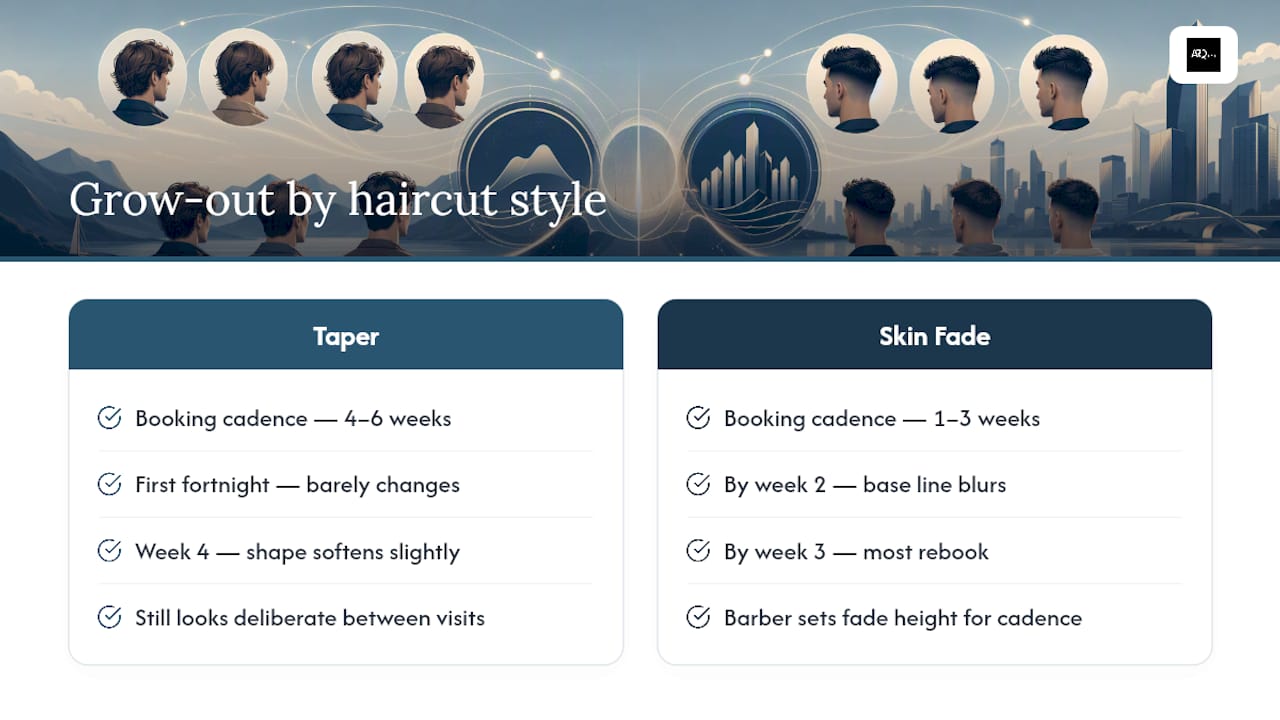
Grow-out speed is the real differentiator once the initial cut is done. A taper barely changes shape in the first fortnight; by week four it has softened slightly but still looks deliberate, which is why most men stretch it to the 4 to 6 week mark before rebooking.
A skin fade tells a different story. By week two, the sharp line at the base has already started to blur, and by week three most men are back in the chair. Barbers often plan the fade height around a client’s realistic booking interval, so the style still flatters when it’s not freshly cut, not just on day one.
Between visits, a neck tidy-up at home with a trimmer, a light matte product to disguise regrowth on top, and avoiding tight hats that flatten the line can all buy an extra week without a full appointment.
What to say to your barber for the exact result you want
Vague requests are the single biggest cause of a haircut that misses the mark. Bring a photo, but pair it with specific language.
For a taper: “Scissor taper, keep length on top, blend down to the nape, no skin showing.”
For a mid skin fade: “Mid fade, fade line at temple height, take it to skin, leave [length on top for styling].”
For a low taper fade: “Low fade starting just above the ears, taper the rest, fairly natural.”
For a skin taper: “Taper on top, but take it to skin at the shortest point near the neckline.”
Always specify both the height (low, mid, or high) and the depth (to skin, or to a specific guard number), since barber-education sources consistently flag this exact combination as the most common source of miscommunication in the chair.
Ricardo’s rules for choosing in the chair
Placement decides the outcome more than the name of the style ever does. Ricardo starts every consultation by mapping the fade or taper height against face shape and the client’s real booking rhythm, not just what looks striking in a reference photo. A client who admits they’ll stretch appointments to six weeks gets a different recommendation to one who wants a fresh line every fortnight.
That consultation approach, refined over three decades of precision cutting and styling at ARQ Hair, is why the studio treats “taper or fade” as a lifestyle question first, and a technical one second.
The choice conventional guides get wrong
Most comparisons treat this as a style decision. It isn’t. It’s a scheduling decision dressed up as one. The real question every guide should lead with is: how many barber visits will you actually keep, honestly, over the next six months?
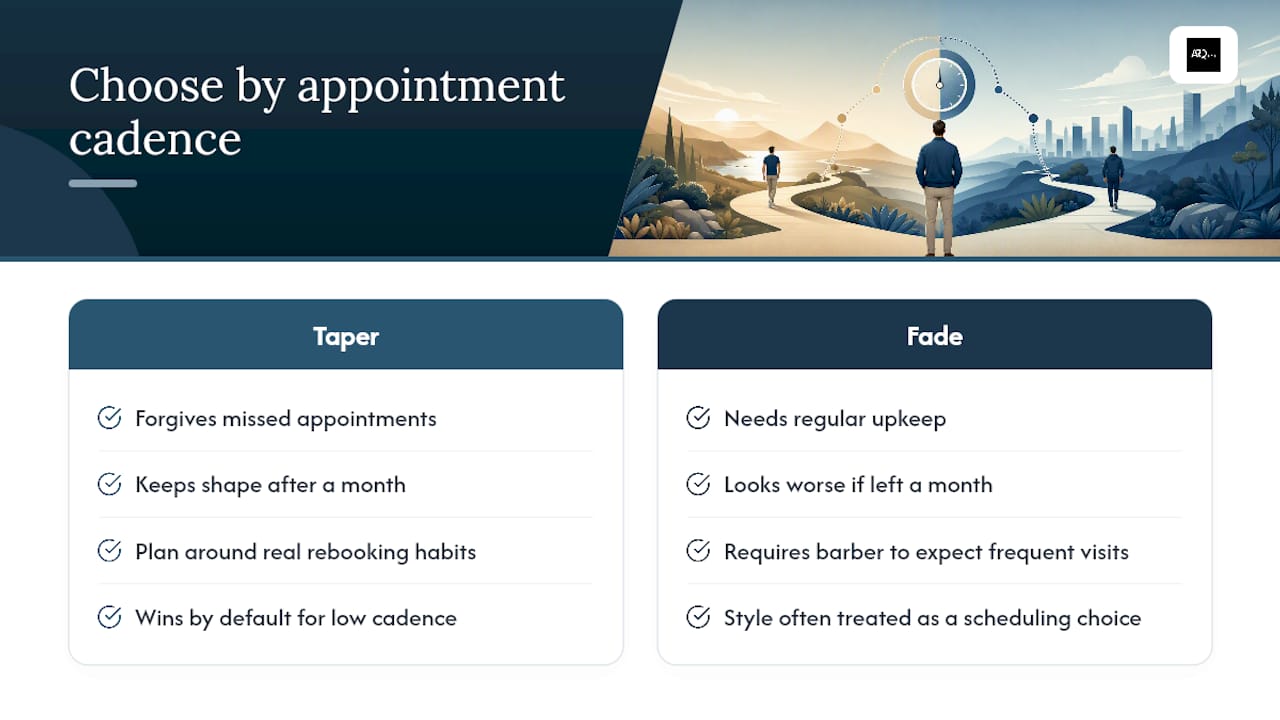
Conventional advice leans hard on face shape and photos, which matter, but underweight the maintenance calendar that determines whether a haircut still looks good in week three. A stunning skin fade that grows out unattended for a month looks worse than a mediocre taper left the same length of time. That’s the gap nobody mentions.
Prioritise your realistic appointment cadence first, then let face shape and hair texture narrow the placement. Ask your barber to plan the cut around your actual rebooking habits, not your best intentions. A taper fade often wins by default here, because it forgives a missed appointment without losing all its shape.
— RICARDO
Book a precision taper or fade with ARQ Hair
Arqhair is the sharper alternative to guessing your way through a barbershop menu. Every cut starts with a proper consultation, mapping your face shape, hair texture, and realistic booking cadence against the placement that will actually suit you, whether that’s a soft taper or a crisp skin fade.
The team, made up of Wella Colour Experts with three decades of family craftsmanship behind them, brings that same precision to cutting and styling as they do to colour work. If a fade or taper is part of a bigger refresh, browse the gallery of finished looks for inspiration before your visit, and pair your grooming with a solid at-home skincare routine to keep the whole look sharp between appointments. Ready to stop explaining yourself to a new barber every few months? Book your cutting and styling appointment with ARQ Hair today.
Sources
Recommended
Comments