
Salon Tested Scalp Treatment Benefits: Why Monthly Care Works

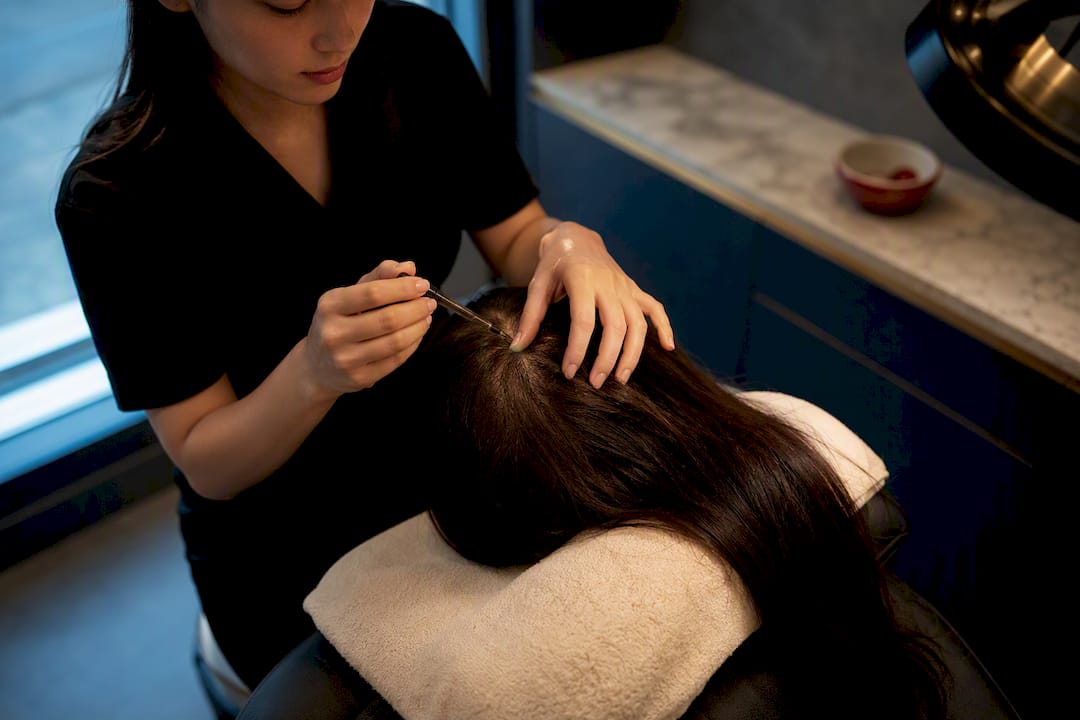
A scalp treatment deep cleans the skin beneath your hair, calms inflammation, and clears the way for nutrients and active ingredients to reach the follicle. That combination is what drives the main scalp treatment benefits: less flaking, better oil balance, and a stronger environment for hair to grow. The rest of this guide explains how those effects happen, which type suits your scalp, and how often you actually need one.
TL;DR:
Regular scalp treatments improve circulation, reduce inflammation, and clear buildup, which support healthier hair growth and reduce dandruff.
Professional protocols involve assessment, tailored exfoliation, and infusions, while at-home care primarily relies on gentle scrubs and medicated shampoos.
Frequency varies from monthly maintenance for healthy scalps to weekly or biweekly sessions for active issues, with long-term results building over months.
Sensitive or inflamed scalps require patch testing, gentle products, and should be checked by a specialist if severe symptoms occur.
Most scalp problems are best managed through consistent care and assessment integrated into regular hair appointments, not quick-fix treatments.
Table of Contents
The specific benefits of a scalp treatment (and why each one matters)
Scalp treatments work on several fronts at once, which is why the results feel more noticeable than a standard shampoo and condition.
Deep cleansing and unclogging follicles. Product residue, dead skin and excess sebum sit at the root and can physically restrict how a hair grows. Clearing that buildup gives each strand room to emerge properly.
Increased circulation to the hair bulb. Massage based treatments boost blood flow to the scalp, and a standardised daily scalp massage study that found measurably thicker hair after 24 weeks of consistent practice.
Reduced dandruff, flaking and itch. Antifungal and anti-inflammatory ingredients target the yeast and irritation behind most flaking, rather than just masking it.
Balanced oil production. A properly cleansed scalp regulates sebum more evenly, so hair looks less greasy at the roots and less dry at the ends.
Better absorption of serums and actives. Once buildup is gone, treatment ingredients can actually reach the skin instead of sitting on top of it.
Immediate cosmetic payoff. Most clients notice softer texture, more shine and a visibly calmer scalp the same day.
Pro Tip: If your hair feels fine but your scalp feels tight, itchy or oily within a day of washing, that is scalp imbalance, not a hair problem. Treat the scalp, and the hair symptom usually resolves on its own.
Why scalp treatments work: the biology behind the benefits
The benefits above are not cosmetic sleight of hand. They follow from measurable changes in scalp biology, and they connect to what actually happens at the follicle.
Malassezia, a yeast naturally present on most scalps, becomes a problem when it overgrows and triggers inflammation. Removing product film and dead skin through exfoliation reduces its food source, and lowering Malassezia activity is linked to reduced oxidative stress on the follicle, a stress pathway implicated in premature hair thinning.
The scalp carries its own microbiome, and its balance directly affects conditions like dandruff and seborrheic dermatitis. Supporting that balance, rather than stripping the scalp entirely, is what emerging microbiome research points to as the more effective long-term approach.
Massage, steam and scalp devices add a mechanical layer to this: they increase microcirculation, which improves how efficiently nutrients and oxygen reach the follicle. Dermatology sources treat this as preventative rather than curative care. Regular sessions interrupt the inflammatory cycle before it damages the follicle enough to weaken new growth, which is why consistency matters more than any single visit.
Pro Tip: A single scalp treatment can leave your scalp feeling instantly better, but the follicle-level changes that support hair density build up over repeated sessions, not one.
Salon treatments vs at-home care: what each involves
Choosing between a salon protocol and an at-home routine comes down to how active your scalp issue is and how much control you want over the process.
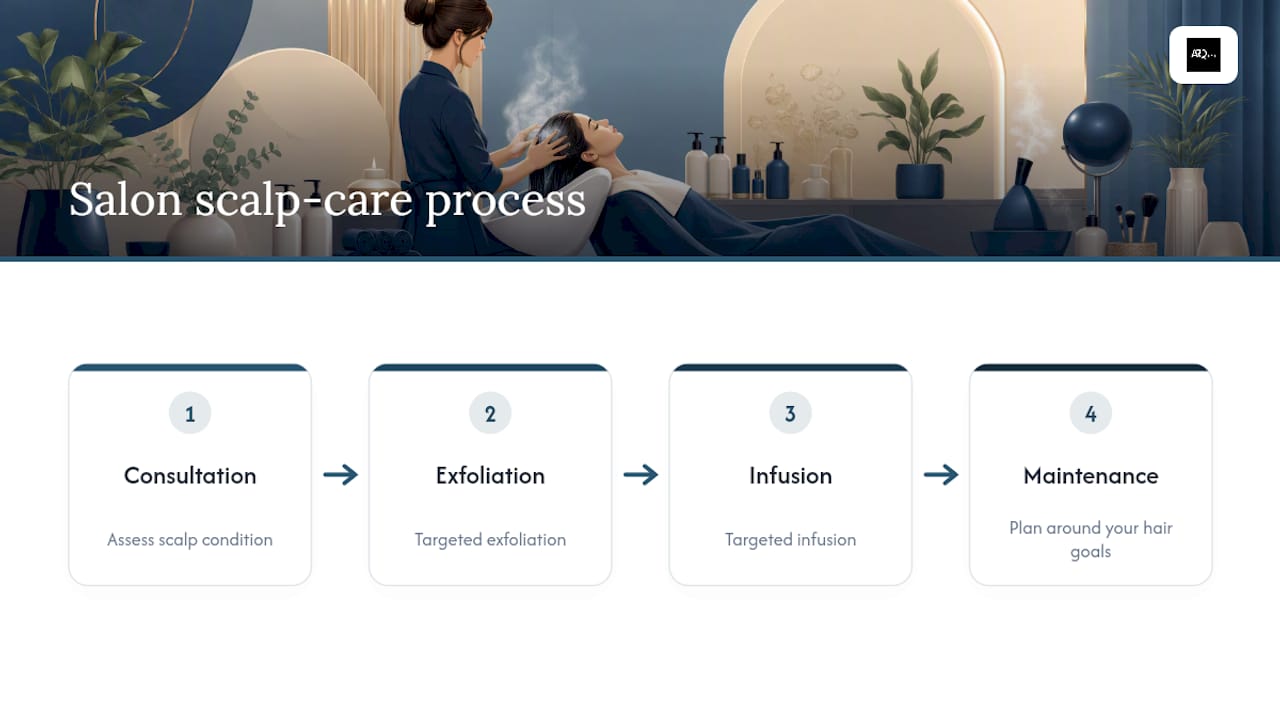
Salon protocol. A stylist assesses your scalp, applies controlled exfoliation suited to your skin’s sensitivity, uses steam or heat to open the follicle, then infuses professional-grade serums tailored to your scalp before mapping a maintenance plan.
At-home scrubs and masks. Physical or chemical exfoliants (often containing salicylic acid) lift buildup between salon visits, though they need gentler application than a professional would use.
Medicated shampoos. Zinc pyrithione and ketoconazole target Malassezia directly and work well for mild, recurring flaking.
Leave-on serums. Ingredients like panthenol and ectoin support the scalp’s barrier function, while caffeine and rosemary extract are commonly used to stimulate circulation.
Patch test any new active before full application, and avoid exfoliating scrubs on broken or actively inflamed skin. Arqhair’s scalp treatment protocol follows this structured, assess-first approach rather than a one-size product.
How often you need treatment and who benefits most
Frequency depends entirely on what your scalp is dealing with, not a fixed calendar rule.
Maintenance: a monthly session is a reasonable baseline for a generally healthy scalp.
Active concerns: persistent dandruff, heavy product use, or a consistently oily scalp often call for weekly or fortnightly attention until symptoms settle.
Timeline for results: most people notice better scalp comfort within a few weeks; measurable improvements in hair density typically take several months of consistent care.
Combining approaches: at-home upkeep between monthly or six-weekly salon visits tends to outperform either method used alone.
Stocking a maintenance serum between appointments keeps the scalp barrier supported without needing weekly professional visits.
Side effects, precautions and when to see a specialist
Exfoliating scrubs and potent actives like salicylic acid or antifungal shampoos can irritate sensitive or already-inflamed skin, so always patch test on a small area first and choose a gentler formula if redness appears. Dilute essential oils before scalp application and never exfoliate over broken skin or open sores.
Cosmetic scalp care improves comfort and appearance, but it is not a substitute for medical treatment. See a dermatologist or trichologist if you notice intense pain, a spreading rash, sudden heavy shedding, or symptoms consistent with severe psoriasis or alopecia areata. These conditions need prescription-strength intervention that salon treatments are designed to complement, not replace.
How Arqhair approaches scalp health in the salon
With three decades of family expertise and a team of Wella Color Experts, Arqhair treats the scalp as the foundation of every colour and cut. Every consultation starts with an assessment of scalp condition, followed by targeted exfoliation, infusion, and a maintenance plan built around your hair goals, not a generic template.
Book a scalp assessment that fits your hair goals
Most people treat scalp care as an afterthought to colour or cut, which is backwards: a congested, inflamed scalp undermines every service built on top of it, including a fresh balayage or a precision cut. Arqhair builds scalp assessment into the consultation itself, so any treatment plan works with your colour history and hair goals rather than against them.
If you already have a colour or styling appointment booked, ask about adding a scalp assessment beforehand. It costs nothing to check whether buildup or irritation is quietly working against your results. Explore Arqhair’s professional hair colour services and mention scalp concerns when you book, so your stylist can tailor the treatment plan from the first consultation.
An honest view on where scalp treatments fit
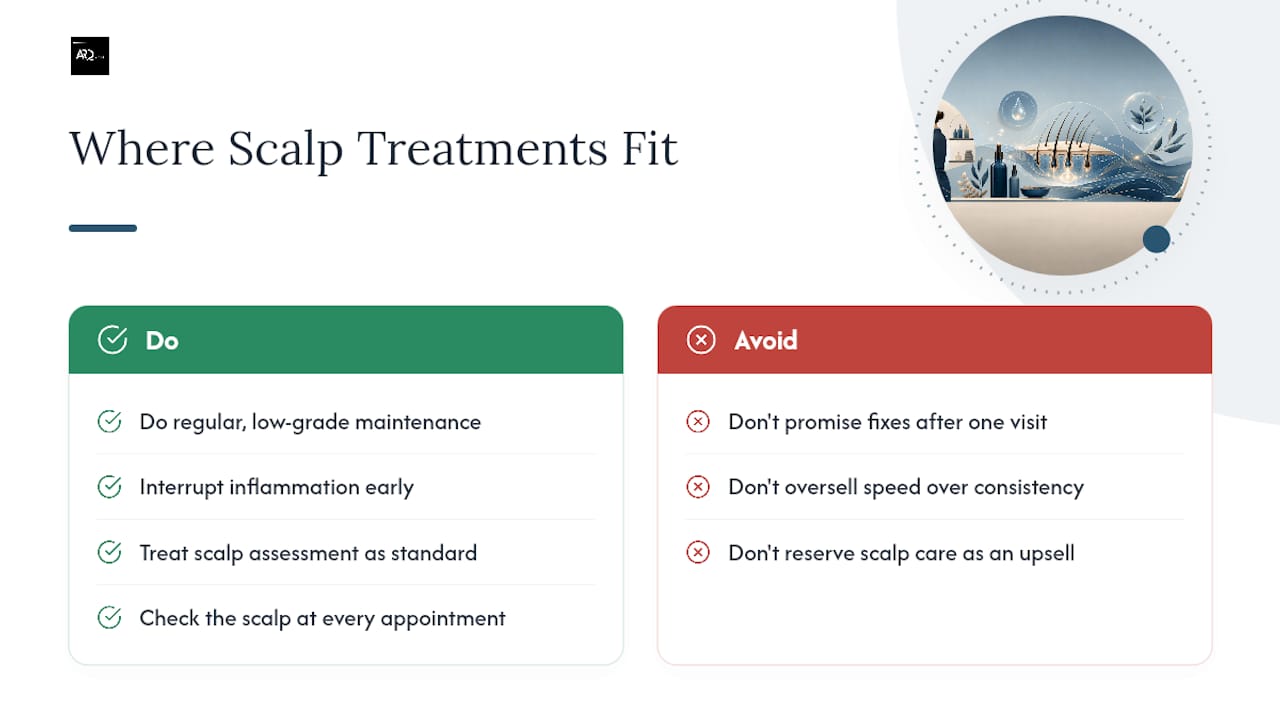
Most of the marketing around scalp care oversells speed and undersells consistency. A single scalp facial will not fix months of product buildup or a stressed follicle overnight, and anyone promising visible density change after one visit is stretching the evidence. What the research actually supports is slower and less exciting: regular, low-grade maintenance that interrupts inflammation before it becomes damage.
The overlooked point is that scalp care and hair care are not the same discipline, even though they get sold as one. You can have gorgeous colour and a genuinely unhealthy scalp underneath it, and most salons never check. The bigger opportunity isn’t a fancier serum. It’s treating scalp assessment as a standard part of every appointment, not an upsell reserved for people who already suspect something is wrong.
— RICARDO
Sources
Recommended
Nioxin Scalp Treatment London: The Professional Guide to Thicker Hair
Olaplex Treatment London: The Ultimate Guide to Restoring Hair Integrity
Olaplex Treatment for Damaged Hair: London’s Luxury Restoration Guide
The Definitive Keratin Smoothing Treatment in Fulham: A Masterclass in Effortless Hair (2026)
Comments