
7 Natural Hair Care Routine Steps for Sensitive Scalps

Last Updated: 22 November 2026
Quick Summary
The best natural hair care routines for a sensitive scalp focus on gentle, sulphate-free and fragrance-free cleansing, washing every two to three days, and conditioning only the lengths. Patch test new products for 24 to 48 hours and change one product at a time to identify triggers.
Wash a sensitive scalp every two to three days, though fine or oily hair may need daily gentle cleansing.
Patch test new products behind the ear or inner forearm for 24 to 48 hours before use.
Detangle hair dry before washing, working from ends to roots to prevent matting.
Apply conditioner from mid-length to ends and keep it off the roots to avoid build-up.
See a GP or dermatologist if itching, redness or flaking persists despite a gentler routine.
Struggling with an itchy, reactive scalp?
ARQ Hair builds personalised, gentle hair care routines for sensitive scalps in Fulham.
Table of Contents
Why a Sensitive Scalp Needs a Different Routine
A sensitive scalp is skin that reacts to cleansing and styling with itching, dryness, redness or flaking more readily than most.
The difference is the scalp barrier. This thin outer layer of skin holds in moisture and keeps irritants out. Over-washing, hot water and alcohol-heavy styling products can all weaken it.
Below, we break down the steps that matter most, from choosing a shampoo to knowing when to see a doctor.
Choosing a Natural Shampoo for Sensitive Scalp
The best natural shampoo for a sensitive scalp is one that cleanses gently and lists few potential irritants. Look for sulphate-free formulas first, as sulphates are a common cause of stinging and dryness on reactive skin. Fragrance-free matters just as much: "natural" fragrance from essential oils can trigger reactions in some people, so unscented is often safer than botanical.
Sulphate-Free and Fragrance-Free: What to Look For
Read the label for these signals:
No SLS or SLES in the first few ingredients
No added fragrance or parfum, including essential-oil blends
Short ingredient lists are easier to patch test and easier to tolerate
No alcohol denat high up the list
A pH close to the scalp's natural acidity where stated
One honest limitation: "natural" is not a regulated guarantee of gentleness. A plant-derived essential oil can irritate a reactive scalp as readily as a synthetic one. Judge the formula by what it leaves out, not by how botanical it sounds.
How Often to Wash a Sensitive Scalp
Washing a sensitive scalp every two to three days suits most people, though fine or oily hair may need daily gentle cleansing. The key is consistency and mildness, not frequency alone. Over-washing can strip natural oils and leave the scalp tight and flaky; under-washing can let product build-up sit against the skin.
A common mistake is reaching for a strong clarifying shampoo after a bad week. That resets the cycle of irritation. Instead, wash with a mild shampoo, massage with fingertips rather than nails, and rinse thoroughly. If your scalp feels comfortable after washing rather than tight, your frequency is about right.
Sensitive Scalp Hair Products to Avoid
The sensitive scalp hair products to avoid are the ones that strip, coat or sting: harsh sulphates, heavy fragrance, alcohol-based sprays, and anything that sits on the skin for hours. Product build-up is a frequent culprit behind itching and flaking, because residue traps oils and irritants against the scalp.
Watch out for these in particular:
Alcohol-containing styling products that dry the skin on contact
Strong hold gels and sprays that flake and leave residue
Heavy silicones that build up without thorough rinsing
Fragrance-heavy leave-in treatments
Styling, Heat and Tight Hairstyles
Heat styling close to the roots and tight hairstyles both stress a reactive scalp. Braids, tight ponytails and weaves pulled too firmly can cause discomfort and, over time, breakage along the hairline. Give the scalp breathing room: loosen the tension, use heat tools on a lower setting, and let the scalp rest between protective styles.
How to Patch Test Scalp Products Safely
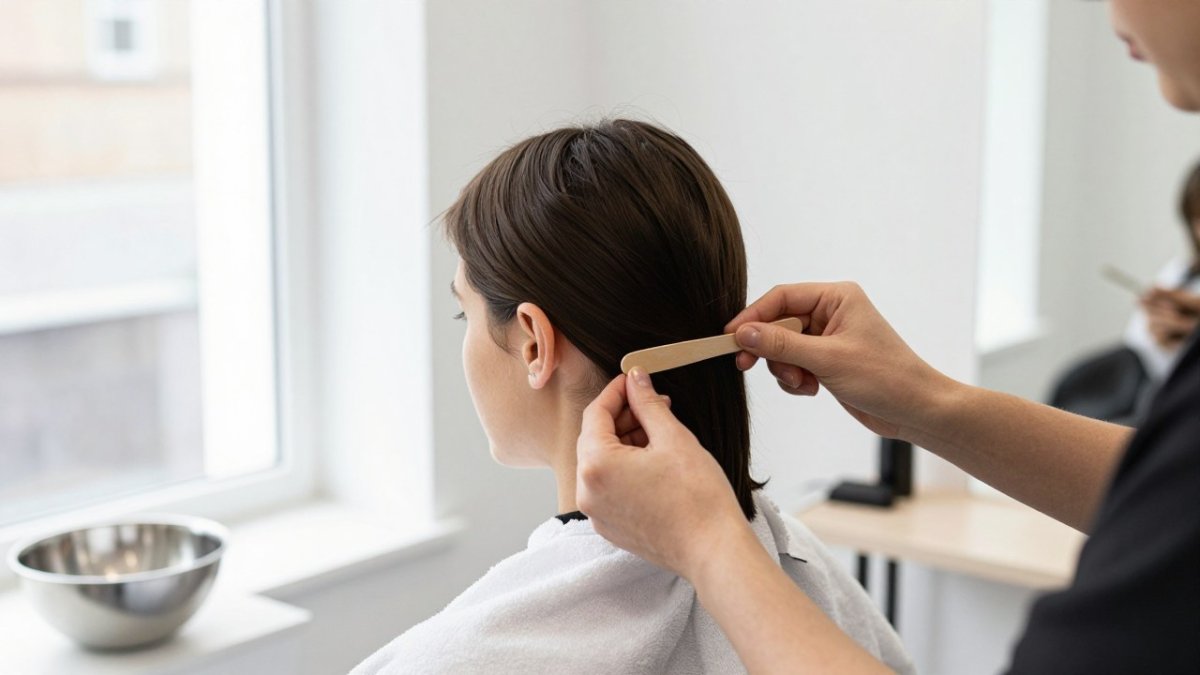
A scalp patch test checks whether a product causes a reaction before you commit to it. Apply a small amount behind the ear or on the inner forearm, leave it for 24 to 48 hours, and watch for redness, itching or swelling. If nothing appears, the product may be suitable to try on the scalp. For a dye or a new shampoo, repeat the test on a small patch of scalp itself, following the product's own instructions.
A trigger-identification method that actually works
Patch testing one product tells you about that product. To find out what is causing ongoing irritation, you need a simple ingredient diary and a rule of one change at a time.
Start with a baseline week. Use only products you already tolerate, a mild shampoo, a fragrance-free conditioner, and note any itching, flaking or redness each day.
Change one product at a time. Introduce a new shampoo, conditioner or styling product gradually, not all at once. If you change three things and react, you will not know which one caused it.
Keep a two-line diary. Note the product name, the date you started it, and any symptoms (itch, tightness, flakes, redness) with a simple 1-5 severity score. A notes app is enough.
Read the ingredient list and record the first five ingredients. Common irritants to flag include fragrance or parfum, essential oils such as peppermint or tea tree, alcohol denat, and strong surfactants such as SLS. This is not a ban list, some people tolerate them, but it helps you spot patterns.
If you react, stop the new product and return to your baseline for two weeks before testing the next one. If the reaction is severe or spreads beyond the scalp, see a GP.
What patch testing cannot tell you
A patch test will not catch every trigger. Reactions can be delayed, cumulative, or caused by a combination of products rather than one ingredient. If you want a closer look at how to test colour products specifically, our guide on whether a patch test for semi-permanent hair dye is essential walks through the process.
Watch out: do not patch test on broken or inflamed skin, it can give a false reaction and make the irritation worse.
A Step-by-Step Wash Day Routine for Natural and Textured Hair
Natural and textured hair needs a wash day that cleanses the scalp without stripping the lengths. A routine you can repeat needs a clear sequence, a plan for protective styles, and a way to adapt to local water conditions.

Before you wash: detangle and section
Detangle dry, before water. Use fingers or a wide-tooth comb to remove shed hair gently, working from ends to roots. Doing this dry prevents the matting that happens when water hits tangled coils.
Section the hair. Divide into four to eight sections with clips. This is not optional for tight curls and coils: it lets you reach the scalp at the part lines and stops you from scrubbing the lengths against each other.
The wash itself
Rinse with lukewarm water. Hot water strips oils and aggravates itching. In areas with hard water, a final filtered rinse or a chelating shampoo occasionally can help limit mineral build-up that makes hair feel rough.
Apply mild shampoo to the scalp only. Massage with fingertips, not nails, in small circles along each section. Let the suds run through the lengths as you rinse rather than scrubbing the ends.
Rinse thoroughly. Residue left behind is a common cause of flaking. Rinse each section for longer than feels necessary until no residue remains.
Condition the lengths, not the scalp. Apply conditioner from mid-length to ends, keep it off the roots so it cannot build up, and detangle gently with a wide-tooth comb while the conditioner is in.
Rinse cool to seal the cuticle. A final cool rinse helps smooth the hair shaft and can calm an itchy scalp.
Dry gently. Pat with a microfibre towel or an old cotton T-shirt, never rub. Rubbing roughs up the cuticle and creates frizz.
Between washes: scalp care under protective styles
Braids, twists and cornrows need the scalp cleaned at the part lines, so residue does not sit against the skin for weeks. Use a cotton pad or a nozzle bottle to apply diluted mild shampoo or a scalp cleanser along the parts, then blot with a damp cloth. Do not soak the style. If you use a dry shampoo, choose a fragrance-free formula and brush out residue the same day.
Adapting the routine to London's seasons
In winter, central heating and cold winds can dry the scalp; a fragrance-free scalp moisturiser applied to the part lines can help. If your scalp is easily irritated, our guide to gentle hair colour for sensitive scalps covers safe steps for colouring on top of this routine.
Watch out: if your scalp stings during the wash, stop and rinse immediately, do not assume it will settle.
Here is the wash day sequence in order, so you can follow it section by section.
Step | What to do | Note |
1 | Detangle dry, before water | Ends to roots, prevents matting |
2 | Section hair into four to eight sections | Lets you reach the scalp at part lines |
3 | Rinse with lukewarm water | Hot water strips oils and aggravates itching |
4 | Apply mild shampoo to scalp only | Massage with fingertips, not nails |
5 | Rinse thoroughly | Residue left behind is a common cause of flaking |
6 | Condition mid-length to ends | Keep off the roots to avoid build-up |
7 | Rinse cool to seal the cuticle | Can calm an itchy scalp |
8 | Dry gently with microfibre towel or cotton T-shirt | Never rub |
When Scalp Symptoms Need a GP or Dermatologist
See a GP or dermatologist if scalp itching, redness or flaking persists despite a gentler routine, or if you notice sores, crusting, patches of hair loss or symptoms that spread beyond the scalp.
If your scalp is uncomfortable rather than medically concerning, professional care can help you reset. Our salon scalp treatments in London explain what in-salon care involves and who benefits, and our Nioxin scalp treatment guide covers the professional route to thicker-looking hair.
Book a Gentle Consultation at ARQ Hair
Finding a routine that respects a reactive scalp takes trial, patience and a little expert guidance. You can browse more expert advice on our hair care blog, or book an appointment to discuss your scalp and hair needs.
A reactive scalp does not have to mean a permanent compromise on how your hair looks. The right cleansing, the right frequency and a patch-tested product set make a real difference.
Frequently Asked Questions
What is the best hair care routine for a sensitive scalp?
Keep it simple and gentle. Wash with a mild, sulphate-free and fragrance-free shampoo, use lukewarm water rather than hot, and condition mid-lengths to ends rather than the scalp. Avoid alcohol-heavy styling products and tight styles that pull on the roots. Patch test anything new before full use, and give a new routine two to three weeks before judging results. If itching, redness or flaking persists, ask a GP or dermatologist to assess your sensitive scalp.
How often should you wash your hair if you have a sensitive scalp?
There is no single rule, but over-washing strips natural oils and can worsen dryness and irritation. Many people with a sensitive scalp do well washing every two to three days, adjusting for hair type, oiliness and activity. If your scalp feels tight or itchy straight after washing, stretch the gap or switch to a gentler, sulphate-free shampoo. If it feels greasy and congested, wash a little more often. Watch how your scalp responds rather than following a fixed schedule.
Can natural hair products still irritate a sensitive scalp?
Yes. Natural does not mean non-irritant. Essential oils, botanical fragrances and plant extracts can trigger itching, redness or contact reactions in some people. That is why an essential-oil-free, fragrance-free formula is often the safer starting point. Always patch test a new product on a small area of skin before using it on your whole scalp, and stop using anything that causes burning, stinging or a rash.
When should I see a GP about scalp irritation?
Book an appointment if irritation lasts more than a few weeks, keeps returning after you remove a suspected trigger, or comes with spreading redness, swelling, weeping, crusting or hair loss. See a GP urgently if you have severe pain, a rash spreading beyond the scalp, or signs of infection such as pus. A GP can check for conditions like seborrhoeic dermatitis or psoriasis and refer you to a dermatologist if needed.
Comments